Overview
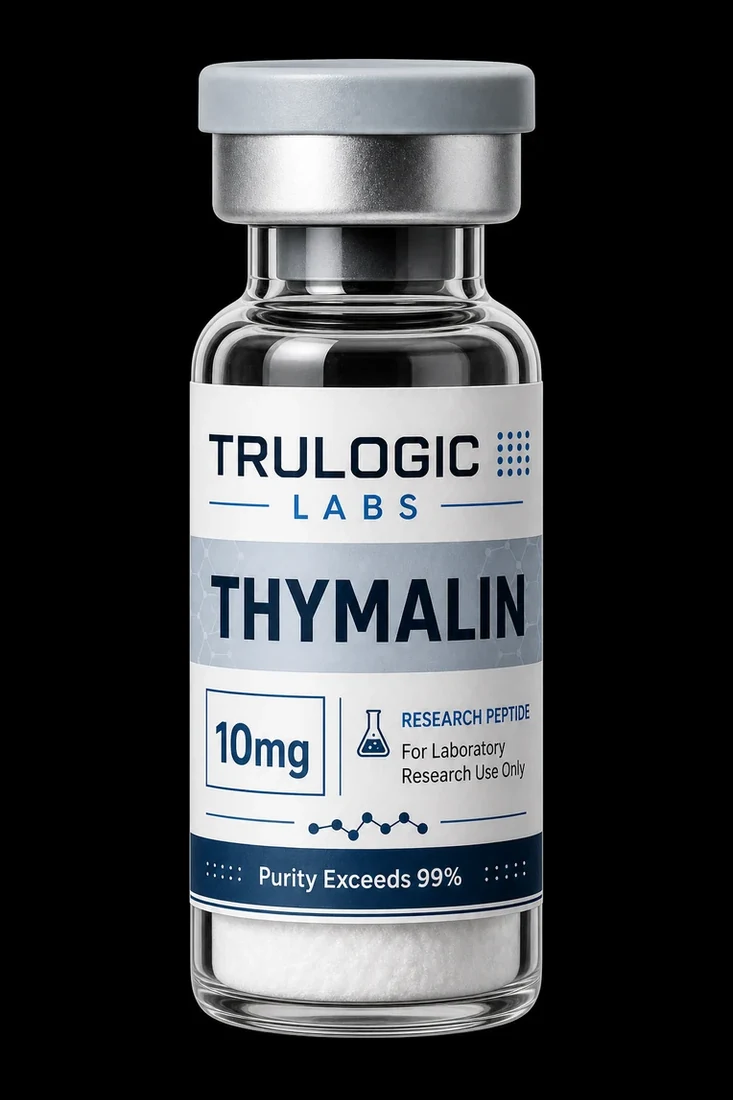
Thymalin is a peptide preparation derived from the thymus, the organ central to T-cell maturation and immune development. It belongs to a family of thymic peptide extracts investigated largely within Russian gerontology and immunology research for their proposed ability to support immune homeostasis, particularly as thymic function declines with age. Because it is a fraction rather than a single purified peptide, its composition can vary by preparation.
Mechanism of action
Thymalin is proposed to act as an immunomodulator that helps regulate the balance and maturation of T-lymphocyte populations and other immune parameters. Mechanistic descriptions in the literature emphasize restoration of cellular and humoral immune balance toward a homeostatic state rather than a single defined receptor interaction. The precise molecular targets are not well characterized given the heterogeneous nature of the fraction.
Research findings
Russian clinical and observational research has reported normalization of immune parameters in older subjects.,Some long-term observational studies from these groups reported associations with age-related health and survival endpoints.,Animal and laboratory work suggests modulation of T-cell populations and immune balance.,Independent replication outside the originating research groups is limited.,High-quality, large randomized controlled trials are lacking.
Research context
Thymalin is studied as a lyophilized polypeptide fraction, and because it is heterogeneous its pharmacokinetics and half-life are not well characterized. Reported research protocols have used courses of administration over defined periods, often in aging or immune-compromised populations, with endpoints focused on immune cell counts and clinical markers rather than standardized pharmacokinetic profiling. This is a research reference only. Not approved for human use outside regulated settings; consult the primary literature.
Handling & storage
Lyophilized powder is generally stored frozen and protected from light and humidity under controlled laboratory conditions. Reconstituted material is typically refrigerated and used promptly per standard peptide laboratory handling, avoiding repeated freeze-thaw cycles.
Reported safety signals
Reported tolerability in the available literature has generally been described as favorable, but the absence of rigorous independent trials means the safety profile is not well characterized.
Studied alongside
Thymalin is frequently discussed alongside Epithalon in Russian longevity research, reflecting parallel interest in pineal and thymic peptides; it is also referenced in the broader immune-aging context with compounds such as NAD+.
At a glance
Research strengths
- Long history of investigation within a defined research tradition
- Plausible rationale linked to age-related thymic involution
- Reported favorable tolerability in available studies
- Frequently paired with other longevity peptides in the literature
Limitations & cautions
- Heterogeneous fraction with no single defined molecular identity
- Limited independent replication outside originating groups
- Pharmacokinetics and half-life not well characterized
- Lacks large, high-quality randomized clinical trials