Overview
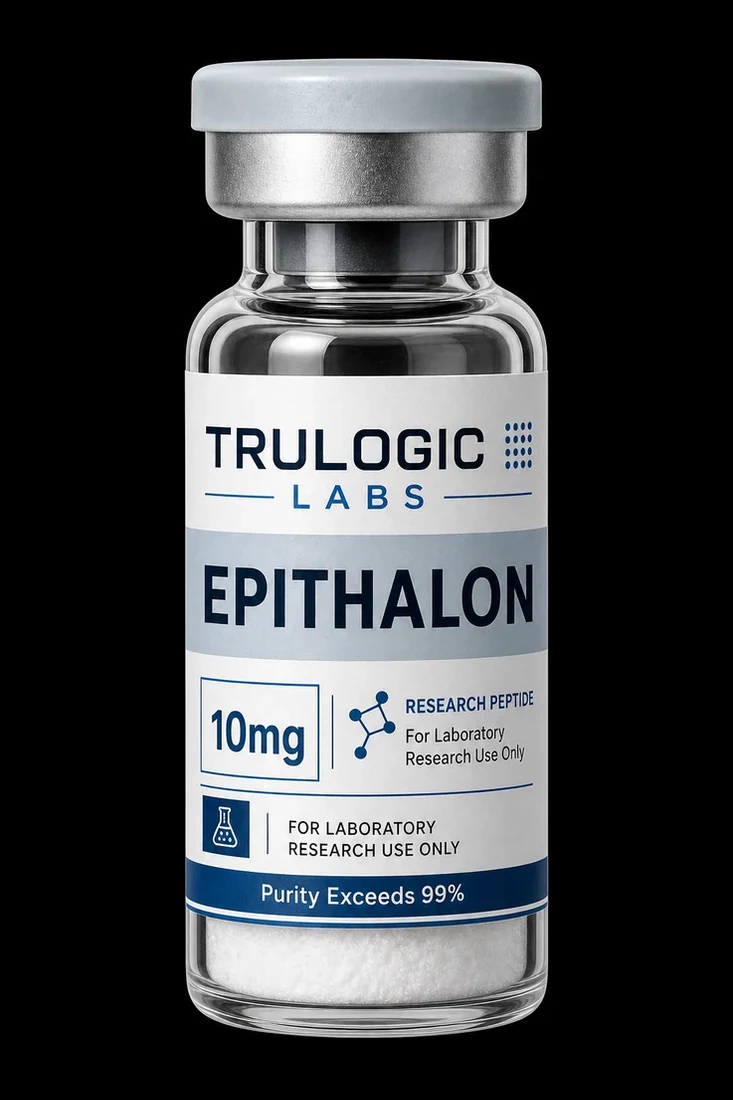
Epithalon (also spelled Epitalon) is a four-amino-acid peptide first described by Russian researchers as a synthetic analog of epithalamin, a polypeptide extract derived from the pineal gland. Research interest has centered on its proposed role in modulating the pineal-driven neuroendocrine axis and age-associated physiological changes. Most published work originates from a small number of laboratories, and the peptide remains an investigational research compound rather than an approved therapeutic.
Mechanism of action
In laboratory studies, Epithalon has been reported to induce expression of the telomerase reverse transcriptase (TERT) subunit, with associated telomere elongation observed in some human somatic cell cultures. Proposed mechanisms also include modulation of gene expression through interaction with DNA and effects on melatonin and cortisol rhythms via the pineal axis. The precise binding targets and signaling pathways in vivo are not well characterized.
Research findings
Cell-culture studies have reported induction of telomerase activity and telomere lengthening in cultured human fibroblasts.,Rodent studies from select laboratories have reported effects on lifespan endpoints and reduced incidence of spontaneous tumors in some strains.,Animal research suggests possible normalization of melatonin secretion and circadian rhythm markers in aged subjects.,Some studies report changes in age-related markers such as cortisol; findings have not been broadly replicated in independent labs.,Robust, large-scale human clinical trials are lacking; available human data are small and preliminary.
Research context
Epithalon is typically handled as a lyophilized peptide reconstituted in a laboratory setting. Reported plasma half-life is short (on the order of minutes), and study designs in animal models have varied widely in duration and frequency across published protocols. Outcome measures in the literature span telomerase assays, circadian markers, and survival statistics rather than standardized pharmacokinetic profiling in humans, which remains poorly defined. This is a research reference only. Not approved for human use outside regulated settings; consult the primary literature.
Handling & storage
Lyophilized powder is generally stored frozen and protected from light and moisture in a controlled laboratory environment. Reconstituted peptide solutions are typically kept refrigerated and used within a limited window per laboratory handling standards. Avoid repeated freeze-thaw cycles.
Reported safety signals
The side-effect profile in humans is not well characterized due to limited clinical data. Reported tolerability in small studies has been described as favorable, but the absence of large controlled trials means safety conclusions cannot be drawn.
Studied alongside
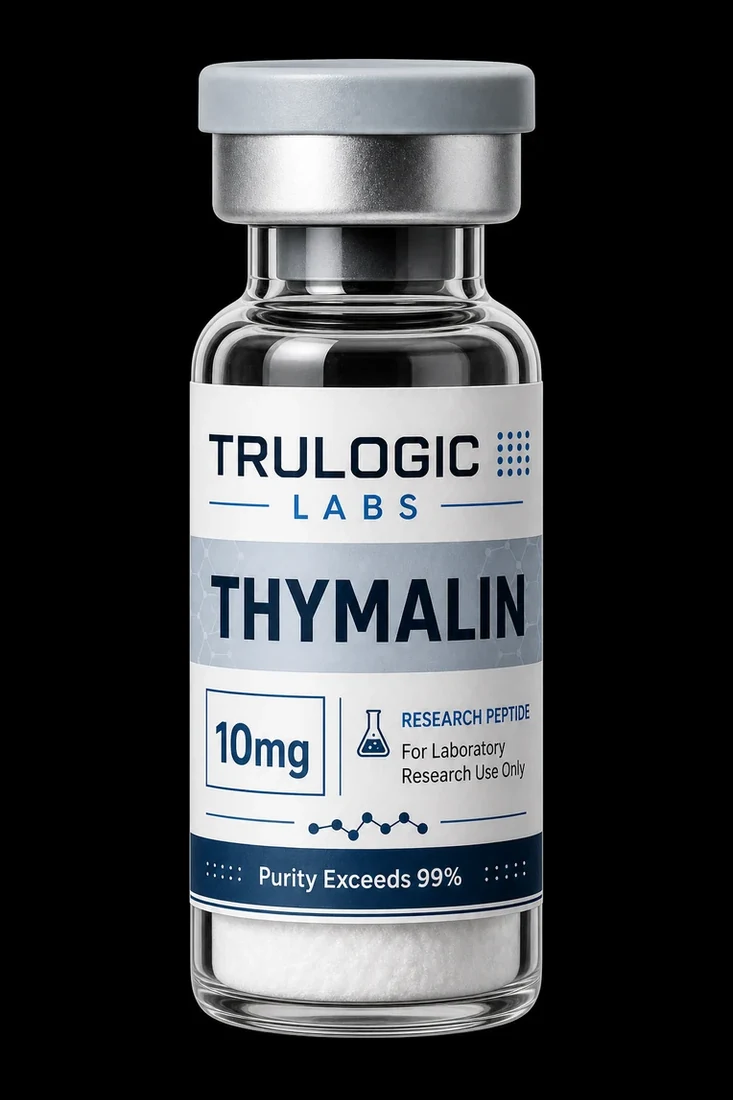
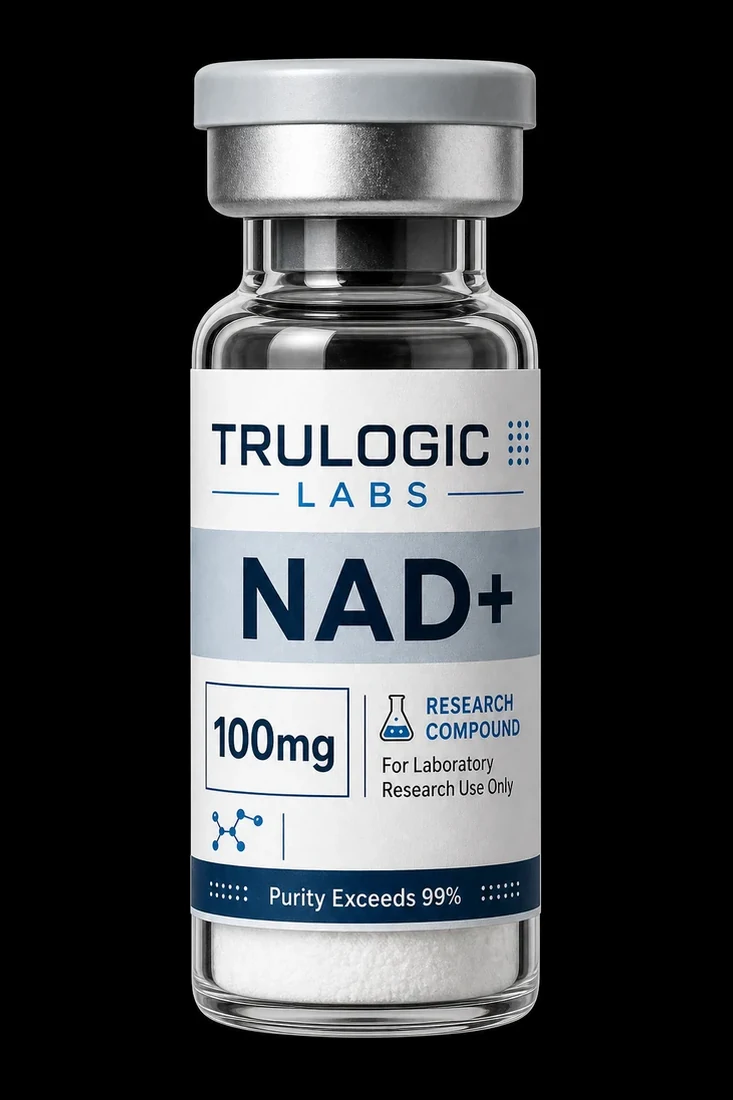
In research discussions Epithalon is sometimes considered alongside other longevity-oriented compounds such as Thymalin and NAD+, reflecting overlapping interest in age-related endpoints; combination data are limited.
At a glance
Research strengths
- Well-defined short peptide sequence that is straightforward to synthesize and characterize
- Notable body of mechanistic interest around telomerase and circadian biology
- Reported favorable tolerability in available small studies
- Frequently referenced in the longevity research literature
Limitations & cautions
- Human clinical evidence is sparse and preliminary
- Much of the data originates from a narrow set of laboratories with limited independent replication
- Pharmacokinetics in humans are poorly defined
- Not an approved therapeutic; regulatory status restricts legitimate use to research