Overview
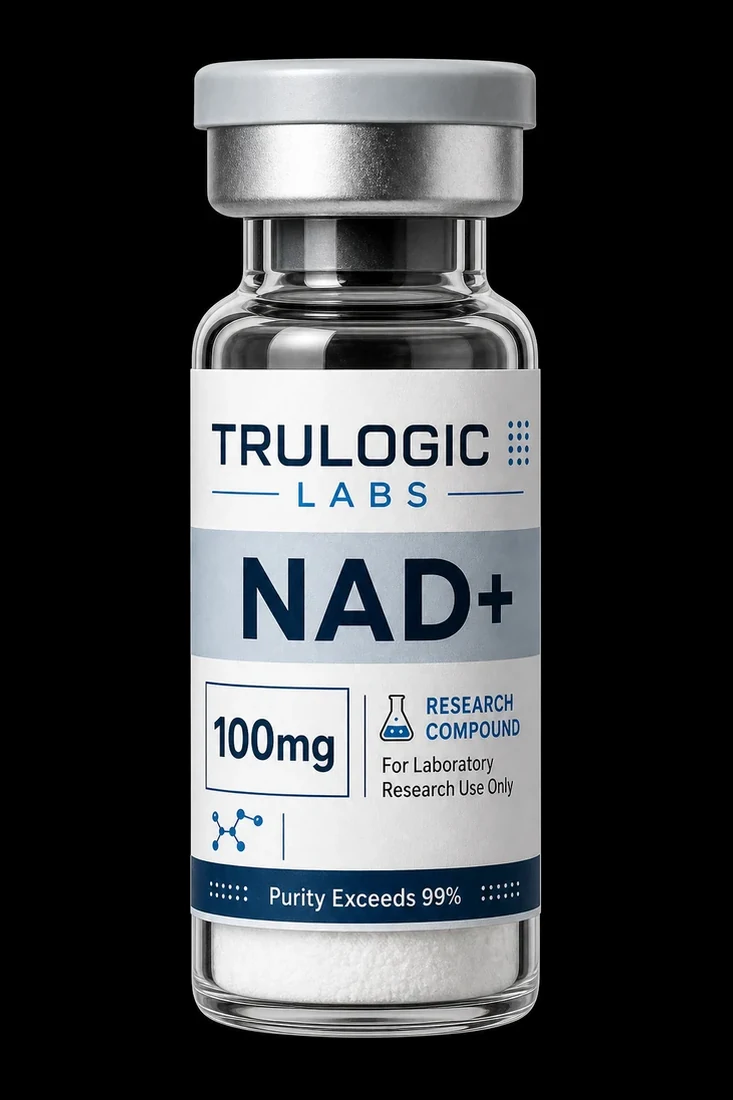
Nicotinamide adenine dinucleotide is a coenzyme found in all living cells, where it cycles between oxidized (NAD+) and reduced (NADH) forms to shuttle electrons in central metabolic pathways including glycolysis, the citric acid cycle, and oxidative phosphorylation. Beyond its classical redox role, NAD+ serves as a consumed substrate for enzyme families that regulate aging-related processes. Tissue NAD+ levels have been observed to decline with age in multiple models, motivating extensive research into NAD+ biology and its precursors.
Mechanism of action
NAD+ functions both as an electron carrier in metabolism and as a substrate for NAD±consuming enzymes, including sirtuins (which deacetylate proteins involved in gene regulation and metabolism) and PARPs (involved in DNA damage repair). By acting as a co-substrate, NAD+ availability is thought to influence the activity of these pathways. Precursors such as nicotinamide riboside and nicotinamide mononucleotide are studied as routes to raise intracellular NAD+.
Research findings
Tissue NAD+ levels have been reported to decline with age across several animal models and some human tissues.,NAD+ serves as the obligate substrate for sirtuin and PARP enzyme activity in laboratory studies.,Precursor studies (e.g., nicotinamide riboside, nicotinamide mononucleotide) report increases in measurable NAD+ metabolites in human and animal research.,Animal research suggests associations between restored NAD+ and improvements in some metabolic and mitochondrial markers.,Direct clinical outcomes from raising NAD+ in humans remain an active and not fully settled area of research.
Research context
NAD+ and its precursors are studied across a range of administration routes in research settings, with measurements typically focused on blood or tissue NAD+ metabolite levels rather than a single defined half-life. Circulating NAD+ turnover is rapid and bioavailability varies by molecular form, which is why much research uses precursors. Study durations and endpoints in the literature vary widely. This is a research reference only. Not approved for human use outside regulated settings; consult the primary literature.
Handling & storage
Lyophilized powder is typically stored frozen, protected from light and humidity, in a controlled laboratory setting. NAD+ is sensitive to degradation in solution; reconstituted material is generally kept cold and used promptly per laboratory handling practice. Avoid repeated freeze-thaw cycles.
Reported safety signals
Reported tolerability of NAD+ and precursors in research contexts has generally been described as acceptable, with some studies noting transient effects such as flushing depending on form and route. Comprehensive long-term safety data are still being developed.
Studied alongside
NAD+ biology is frequently studied in conjunction with sirtuin-activating research compounds and is discussed alongside other longevity-oriented agents such as Epithalon and SS-31 in the context of mitochondrial and aging research.
At a glance
Research strengths
- Fundamental, well-characterized coenzyme with a deep biochemical literature
- Clear mechanistic links to sirtuin and PARP pathways studied in aging
- Active, well-funded research field with multiple precursor approaches
- Measurable biomarkers (NAD+ metabolites) support study design
Limitations & cautions
- Direct human clinical outcomes remain unsettled
- Bioavailability and stability vary substantially by molecular form
- Circulating pharmacokinetics are not well characterized
- Marketing claims often outpace the controlled evidence base