Overview
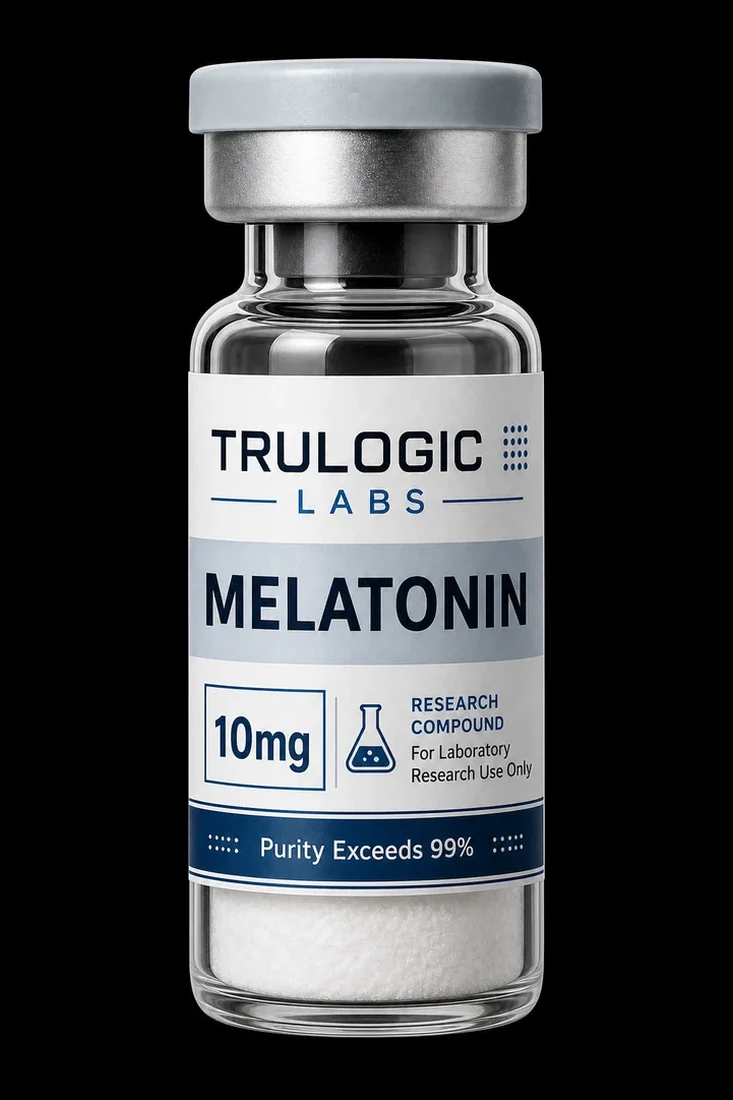
Melatonin is an endogenous hormone synthesized chiefly by the pineal gland in response to darkness, serving as a primary chemical signal of the day-night cycle. It is one of the most thoroughly studied molecules in circadian biology, with well-established roles in regulating the timing of sleep and seasonal physiological processes across many species. Unlike most compounds in this reference, melatonin’s core biology is broadly characterized and widely replicated.
Mechanism of action
Melatonin acts primarily through MT1 and MT2 G-protein-coupled receptors expressed in the brain, including the suprachiasmatic nucleus (the master circadian clock), where it modulates the phase and timing of circadian rhythms. It conveys a darkness signal that helps align internal rhythms with the external light-dark cycle. Melatonin also exhibits direct and indirect antioxidant activity in laboratory studies. Its receptor pharmacology is comparatively well defined.
Research findings
Melatonin is well established as a regulator of circadian rhythm and sleep timing in humans and animals.,Research supports its role in shifting circadian phase, studied in contexts such as jet lag and shift work.,Laboratory studies report antioxidant and free-radical-scavenging activity.,Levels of endogenous melatonin have been observed to decline with age.,It is among the most extensively characterized molecules in this reference set.
Research context
Melatonin has a relatively short half-life that varies by formulation (immediate vs. extended-release), and timing of exposure relative to the light-dark cycle is a central variable in circadian research rather than total quantity alone. Study endpoints commonly include circadian phase markers, sleep-onset measures, and subjective sleep quality. This is a research reference only. Not approved for human use outside regulated settings; consult the primary literature.
Handling & storage
Lyophilized powder is generally stored protected from light and moisture under controlled conditions; melatonin is light-sensitive. Reconstituted material is typically kept cold and shielded from light per standard laboratory handling, avoiding repeated freeze-thaw cycles.
Reported safety signals
In research settings melatonin is generally regarded as well tolerated, with reported effects such as transient drowsiness or grogginess depending on timing and amount; long-term and high-exposure data continue to be studied.
Studied alongside
Melatonin is frequently discussed alongside DSIP in sleep research and is referenced in longevity contexts with compounds such as Epithalon given the shared pineal connection.
At a glance
Research strengths
- Well-characterized, widely replicated circadian biology
- Defined receptor pharmacology (MT1/MT2)
- Large body of human research relative to other compounds here
- Generally regarded as well tolerated in study settings
Limitations & cautions
- Timing-dependent effects are easy to misapply in study design
- Formulation strongly affects pharmacokinetics
- Long-term high-exposure data still developing
- Not approved for general use as a research reference compound