Overview
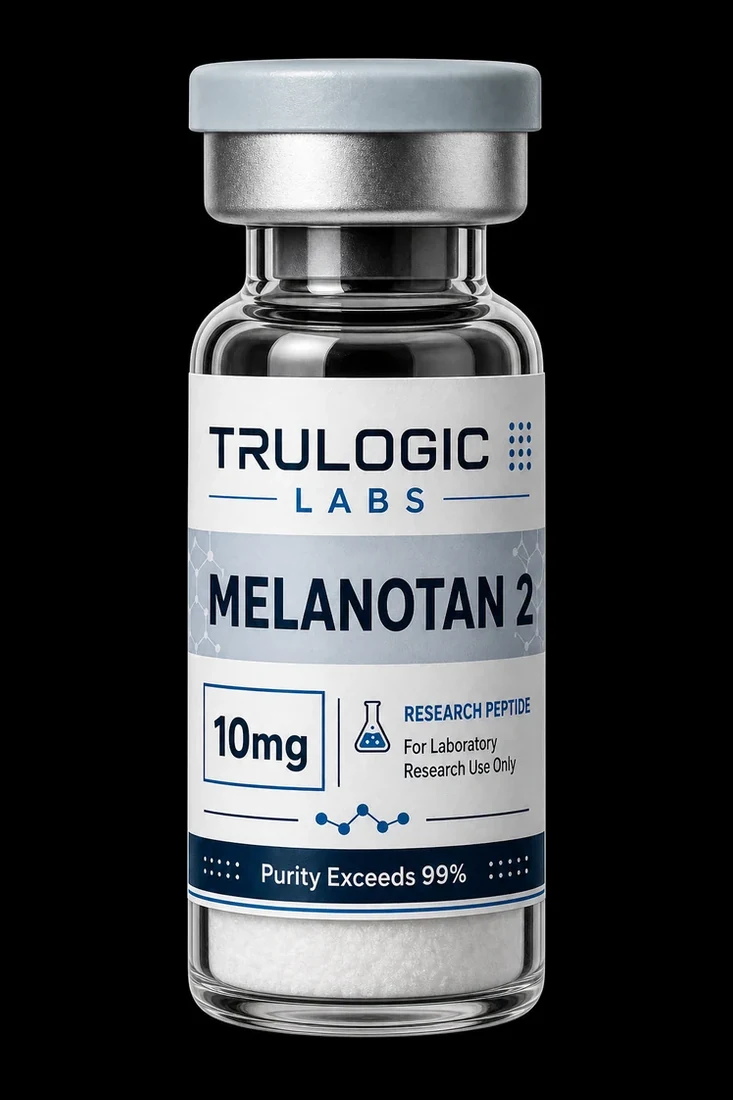
Melanotan 2 is a synthetic cyclic heptapeptide analog of alpha-MSH developed originally in research aimed at photoprotection through stimulated melanogenesis. Because it activates melanocortin receptors broadly, its studied effects extend beyond pigmentation to include influences on appetite and sexual arousal.
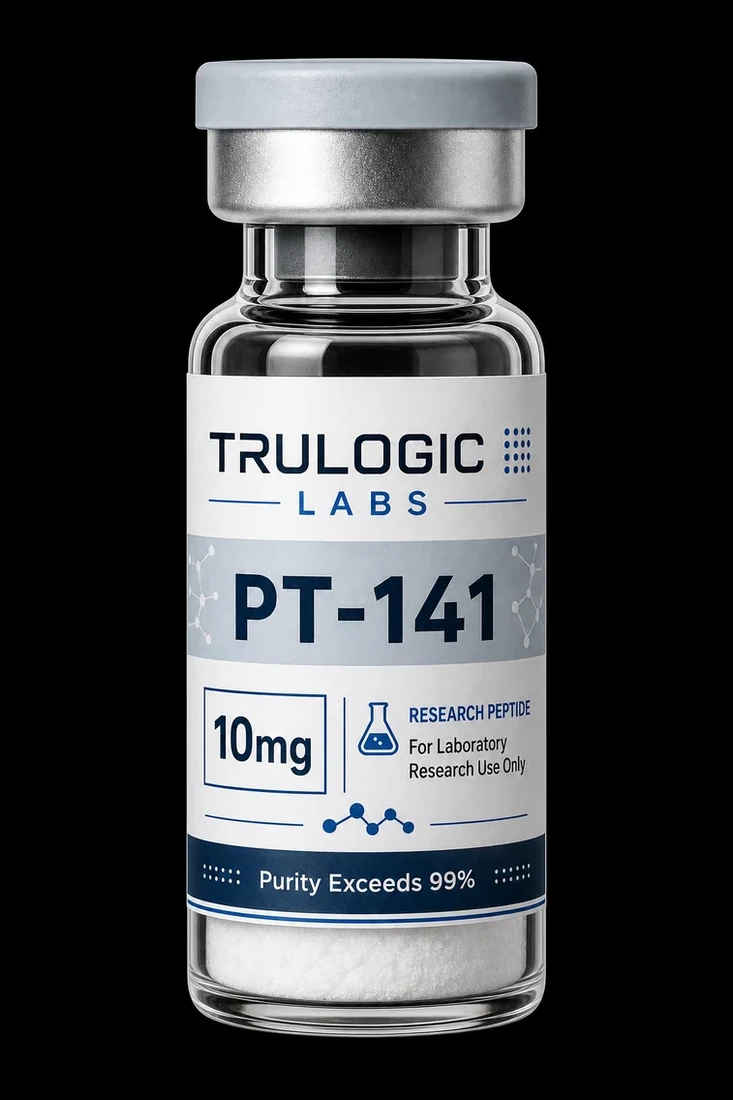
It is the structural parent of the more selective bremelanotide (PT-141). Melanotan 2 itself has not gained regulatory approval and is widely distributed as a research compound rather than a medicine.
Mechanism of action
Research suggests Melanotan 2 acts as a non-selective agonist across multiple melanocortin receptor subtypes, including MC1 (associated with melanogenesis and skin pigmentation) and MC4 (associated with central effects on appetite and sexual arousal). This broad receptor activity explains its multiple reported effects.
MC1 receptor stimulation on melanocytes is thought to drive increased melanin production, while central MC4 activity is associated with the arousal-related effects it shares with related melanocortin peptides.
Research findings
Has been studied for stimulation of melanogenesis and skin pigmentation through MC1 receptor activity.,Research suggests central effects on sexual arousal via melanocortin pathways.,Reported effects on appetite suppression in some animal studies.,Served as the structural basis for the more selective peptide bremelanotide.,Pigmentation and nausea are commonly reported in the literature and user reports.
Research context
Reported half-life values for Melanotan 2 vary considerably across sources, with some estimates around 33 hours, and rigorous human pharmacokinetic characterization is limited compared with approved agents. Study parameters across the literature are heterogeneous and largely preclinical or observational. This entry summarizes those findings at a high level only. This is a research reference only. Not approved for human use outside regulated settings; consult the primary literature.
Handling & storage
Lyophilized peptide is typically stored at -20 degrees Celsius for long-term laboratory storage and protected from light and moisture. After reconstitution in a laboratory context it is generally refrigerated and used within a limited window. Avoid repeated freeze-thaw cycles.
Reported safety signals
Commonly reported effects in the literature include nausea, flushing, darkening of moles and freckles, and appetite changes. Its broad receptor activity is associated with a less predictable effect profile than more selective analogs. Safety characterization should rely on the primary literature.
Studied alongside
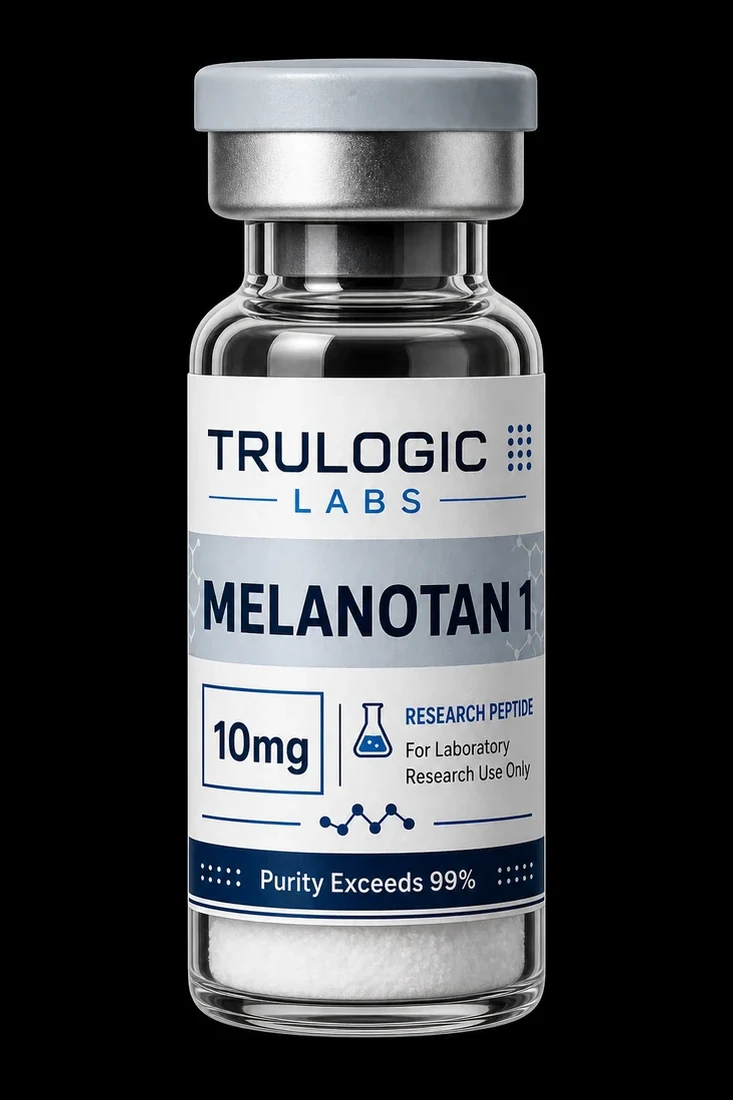
It is frequently discussed in the research community alongside the related melanocortin agonists melanotan 1 and PT-141, all of which share overlapping melanocortin mechanisms. Robust combination data are not well characterized.
At a glance
Research strengths
- Broad melanocortin activity covering both pigmentation and central pathways.
- Well-known structural parent of an approved peptide.
- Long reported duration of action relative to some analogs.
- Extensively discussed in the research literature.
Limitations & cautions
- Not approved for human use in major jurisdictions.
- Nausea and pigmentation changes are commonly reported.
- Non-selective receptor activity gives a less predictable profile.
- Human pharmacokinetic data are limited.