Overview
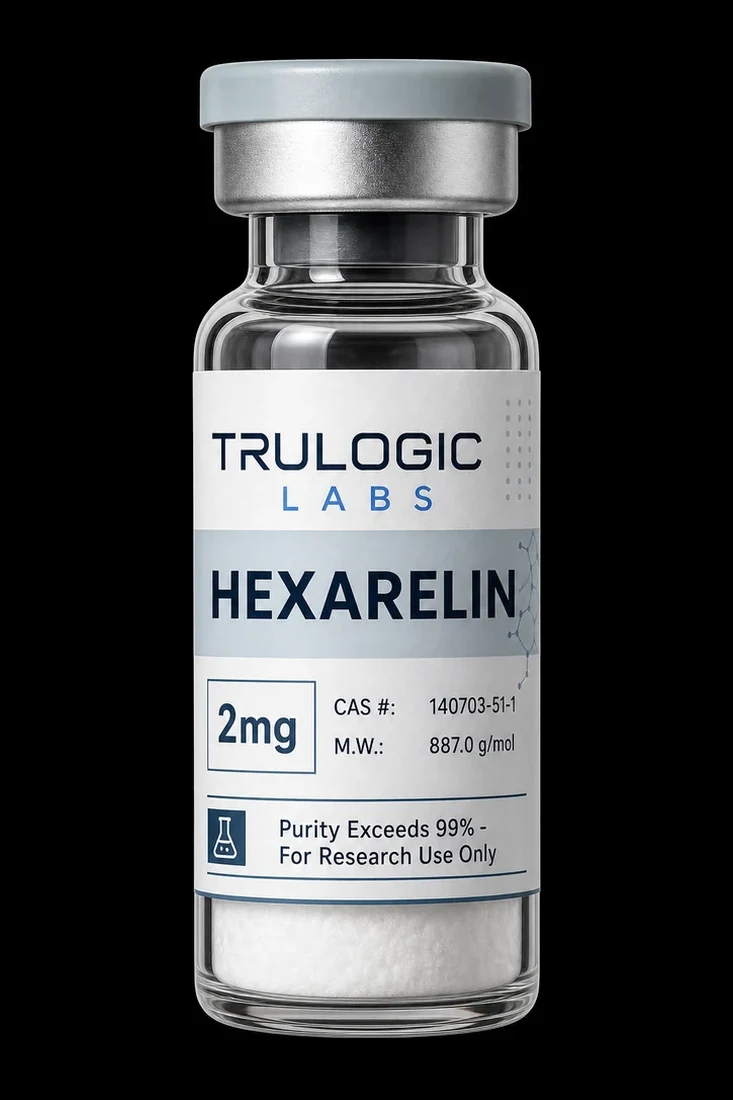
Hexarelin is a synthetic hexapeptide growth hormone secretagogue developed during research into compounds related to GHRP-6. It is recognized in the literature for its high potency in stimulating growth hormone release and for a distinct profile of activity at receptors beyond the classical pituitary ghrelin receptor.
Beyond growth hormone research, hexarelin has attracted interest as a probe of cardiovascular receptor biology, particularly its reported binding to the CD36 receptor found in cardiac and vascular tissue.
Mechanism of action
Research characterizes hexarelin as an agonist at the growth hormone secretagogue receptor (GHS-R1a), driving growth hormone release from pituitary somatotrophs in study models. It is also reported to bind CD36, a scavenger receptor present in myocardial and vascular tissue, a pathway investigated in connection with cardiovascular signaling.
Like other GHRP-class peptides, it is described as modulating the interplay of GHRH and somatostatin influence on the pituitary, contributing to amplified growth hormone secretion in experimental designs.
Research findings
Studied as a highly potent growth hormone secretagogue in animal and cell models.,Research suggests binding to the CD36 receptor in cardiac and vascular tissue.,Investigated for cardiovascular signaling effects in preclinical literature.,Reported potential for receptor desensitization with sustained exposure in studies.,Examined alongside GHRH analogs for combined growth hormone effects.
Research context
Pharmacokinetic literature reports a plasma half-life for hexarelin generally in the range of tens of minutes, with study amounts and schedules varying across preclinical models. Reports of receptor desensitization under continuous exposure mean that response dynamics differ markedly by study design. This is a research reference only. Not approved for human use outside regulated settings; consult the primary literature.
Handling & storage
Typically described in laboratory use as a lyophilized powder stored desiccated and away from light. Long-term storage is commonly reported at -20°C or colder, with reconstituted material refrigerated for limited periods. Handle as a research chemical with standard laboratory precautions.
Reported safety signals
Research literature on growth hormone secretagogues notes possible transient changes in cortisol and prolactin, water retention, and injection-site reactions in study settings. Reports also flag potential receptor desensitization with prolonged exposure. Human safety data are limited.
Studied alongside
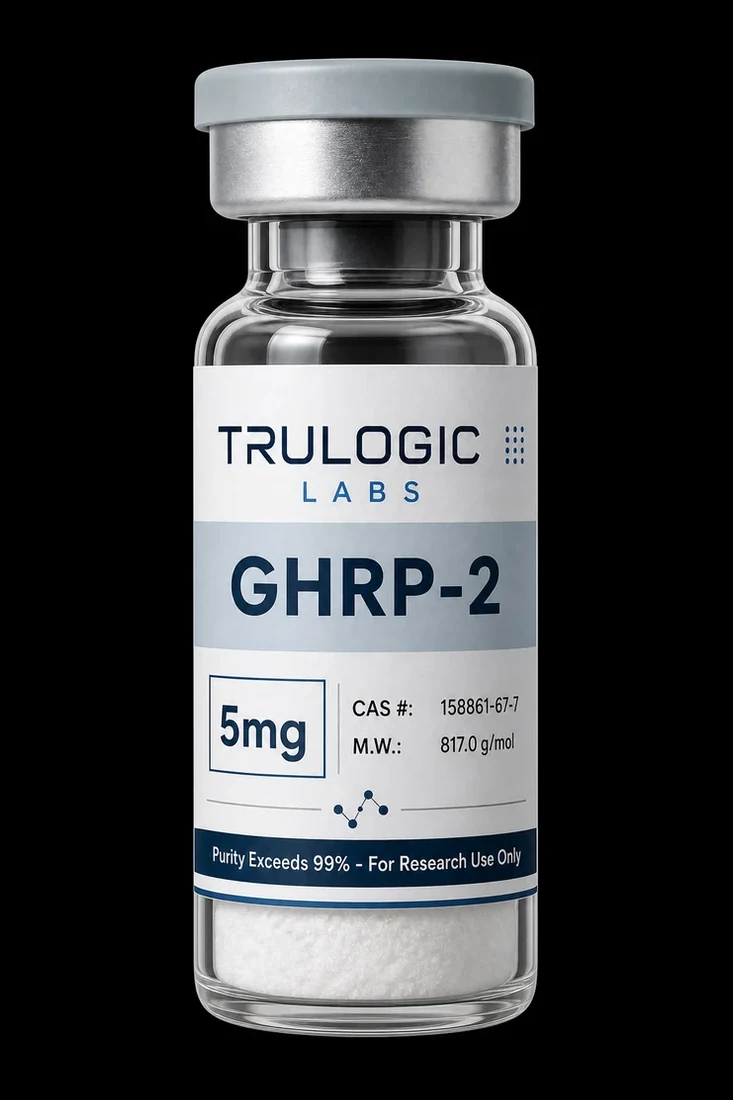
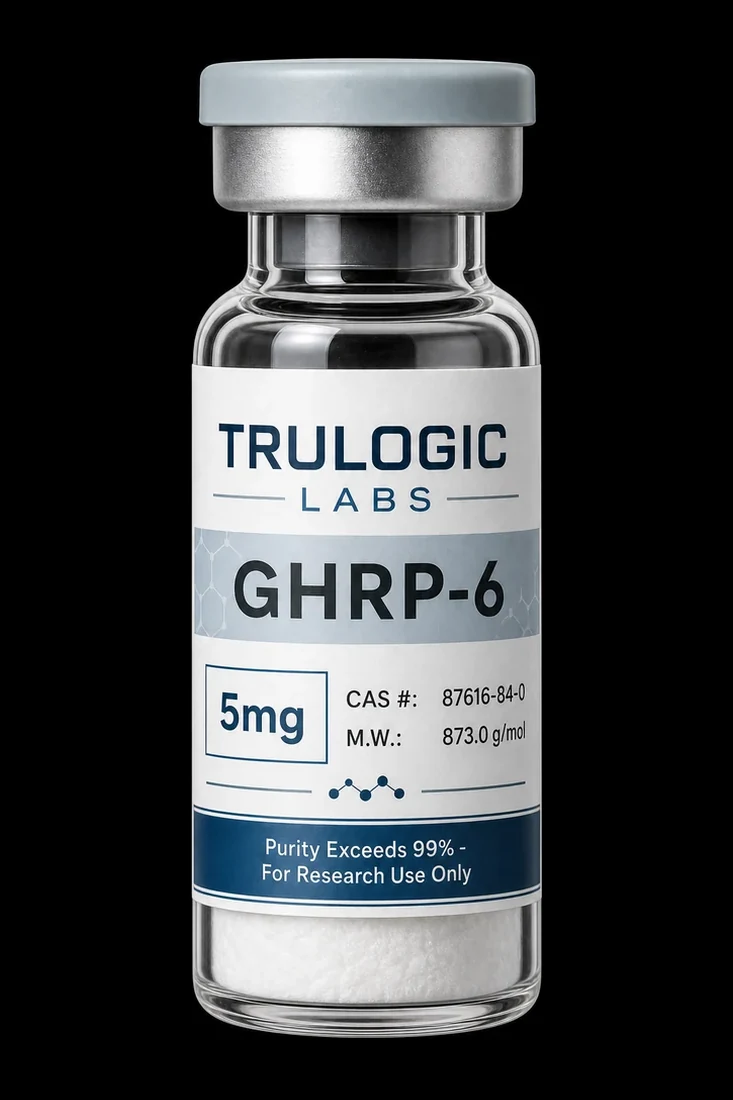
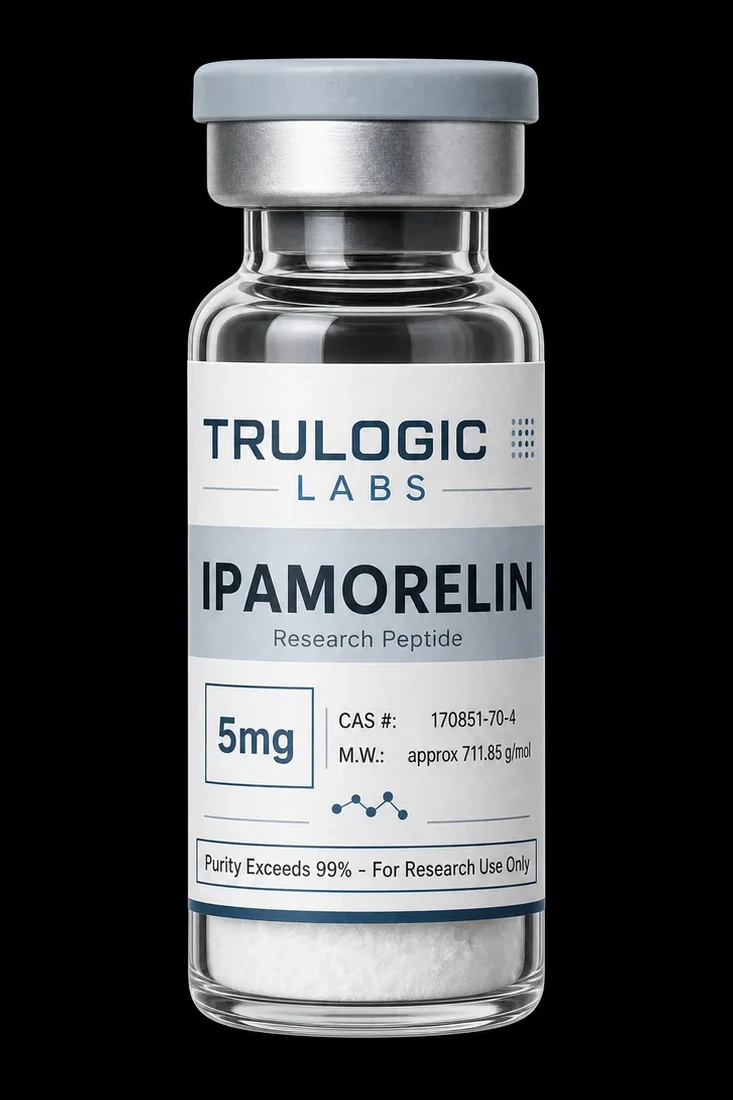
Hexarelin has been examined alongside GHRH analogs such as sermorelin and CJC-1295, and is compared with GHRP-2, GHRP-6, and ipamorelin within secretagogue research.
At a glance
Research strengths
- Among the most potent GHS peptides reported in research
- Distinct CD36 receptor activity of cardiovascular research interest
- Extensive preclinical characterization
- Studied in combination with GHRH-pathway peptides
Limitations & cautions
- Reported receptor desensitization with sustained exposure
- Possible cortisol and prolactin elevation noted
- Short reported half-life in pharmacokinetic studies
- Not approved for human therapeutic use