Overview
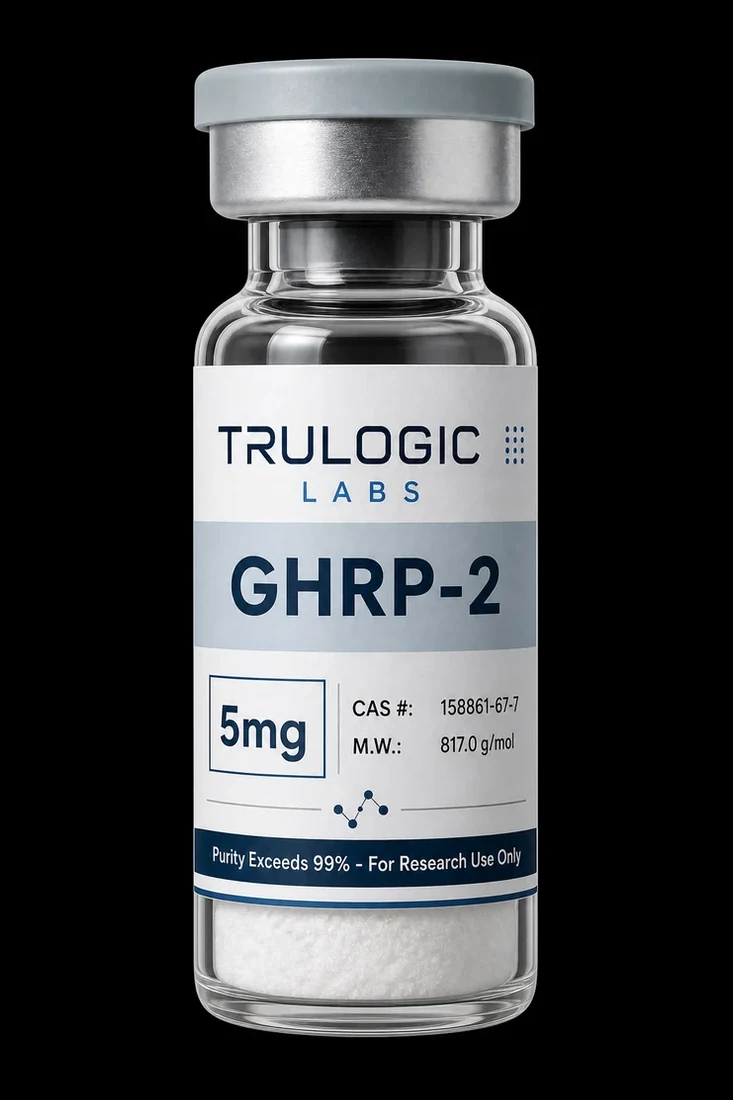
GHRP-2 is a synthetic peptide belonging to the growth hormone-releasing peptide (GHRP) class of growth hormone secretagogues. It was developed during research into compounds capable of stimulating endogenous growth hormone secretion through a pathway distinct from growth hormone-releasing hormone (GHRH). In experimental settings it is frequently used as a tool compound to probe the ghrelin signaling axis and pituitary somatotroph function.
Within the secretagogue family, GHRP-2 is often compared to GHRP-6, hexarelin, and ipamorelin. Investigators have examined it in the context of how short synthetic peptides interact with the growth hormone secretagogue receptor and modulate downstream hormonal outputs in animal and cell models.
Mechanism of action
GHRP-2 has been characterized in research as an agonist of the growth hormone secretagogue receptor (GHS-R1a), the same receptor targeted by the endogenous hormone ghrelin. Binding at this receptor in pituitary somatotrophs is associated in the literature with intracellular signaling that promotes the release of stored growth hormone.
Research also describes a parallel action at the hypothalamic level, where GHRP-class peptides may influence GHRH and somatostatin tone. The net effect reported in study models is amplified pulsatile growth hormone release when the peptide acts in concert with GHRH pathways.
Research findings
Studied as a growth hormone secretagogue acting via the GHS-R1a (ghrelin) receptor in pituitary models.,Research suggests it produces a transient rise in circulating growth hormone in animal studies.,Investigated for synergistic effects when examined alongside GHRH analogs in experimental designs.,Reported to have a weaker appetite-stimulating signal than GHRP-6 in some comparative research.,Has been studied for downstream effects on IGF-1 in animal model literature.
Research context
Research literature reports a relatively short plasma half-life for GHRP-2, generally on the order of tens of minutes, and study designs vary widely in the amounts and schedules used in animal and in-vitro models. Pharmacokinetic parameters such as clearance and peak timing differ across species and assay methods, so cross-study comparison should be made cautiously. This is a research reference only. Not approved for human use outside regulated settings; consult the primary literature.
Handling & storage
Typically described in laboratory settings as a lyophilized powder stored desiccated and protected from light. Long-term storage is commonly reported at -20°C or colder, with reconstituted material kept refrigerated for limited periods. Handle as a research chemical using standard laboratory practices.
Reported safety signals
Research and observational literature note potential effects associated with growth hormone secretagogues generally, including transient changes in cortisol and prolactin, water retention, and injection-site reactions in study contexts. Effects are not fully characterized in controlled human trials.
Studied alongside
In research contexts GHRP-2 has been examined alongside GHRH analogs such as sermorelin and CJC-1295, and compared with other secretagogues including ipamorelin and hexarelin.
At a glance
Research strengths
- Well-characterized as a GHS-R1a agonist in research models
- Frequently used as a reference tool compound in secretagogue studies
- Reported lower appetite signal than GHRP-6 in some comparisons
- Studied in combination with GHRH-pathway peptides
Limitations & cautions
- Short reported half-life in pharmacokinetic studies
- Possible cortisol and prolactin elevation reported in research
- Not approved for human therapeutic use
- Human clinical data are limited