Overview
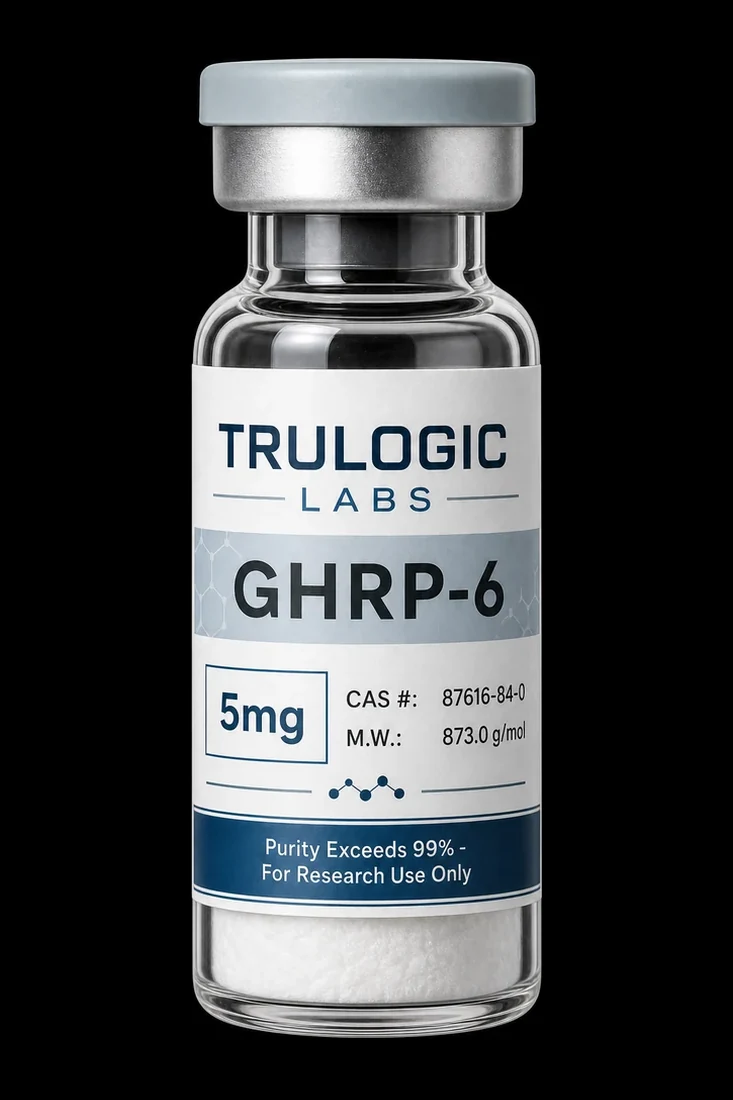
GHRP-6 is a synthetic six-amino-acid peptide that was among the first growth hormone-releasing peptides identified during research into non-GHRH growth hormone secretagogues. It has served extensively as a tool compound in the discovery and characterization of the growth hormone secretagogue receptor and the endogenous ligand ghrelin.
GHRP-6 is distinguished in the literature by its comparatively strong appetite-stimulating signal, which has made it a frequent subject of studies examining the link between the ghrelin axis and feeding behavior in animal models.
Mechanism of action
Research describes GHRP-6 as an agonist at the growth hormone secretagogue receptor (GHS-R1a). Activation of this receptor on pituitary somatotrophs is associated with release of stored growth hormone, while receptor activity in hypothalamic regions is linked in study models to appetite and energy-balance signaling.
The peptide is also reported to modulate the balance of GHRH and somatostatin influence on the pituitary, contributing to amplified growth hormone pulses when studied in combination with GHRH-pathway compounds.
Research findings
One of the earliest GHS peptides used to characterize the ghrelin receptor in research.,Research suggests a notably strong appetite-stimulating effect in animal models.,Studied for transient growth hormone release in experimental settings.,Investigated alongside GHRH analogs for combined secretagogue effects.,Has been studied as a probe of cytoprotective signaling in some preclinical literature.
Research context
Pharmacokinetic research generally reports a short plasma half-life for GHRP-6 on the order of tens of minutes, and experimental amounts and schedules vary considerably across animal and cell-based studies. Receptor-binding and growth hormone-release dynamics differ by species and assay, so quantitative findings are not directly transferable between models. This is a research reference only. Not approved for human use outside regulated settings; consult the primary literature.
Handling & storage
Commonly handled in laboratories as a lyophilized powder kept desiccated and shielded from light. Reported long-term storage is at -20°C or below, with reconstituted solutions refrigerated for short periods. Treat as a research chemical under standard lab safety practices.
Reported safety signals
Literature on growth hormone secretagogues notes possible transient effects such as increased hunger, cortisol and prolactin changes, water retention, and local injection-site reactions in study contexts. Controlled human safety data are limited.
Studied alongside
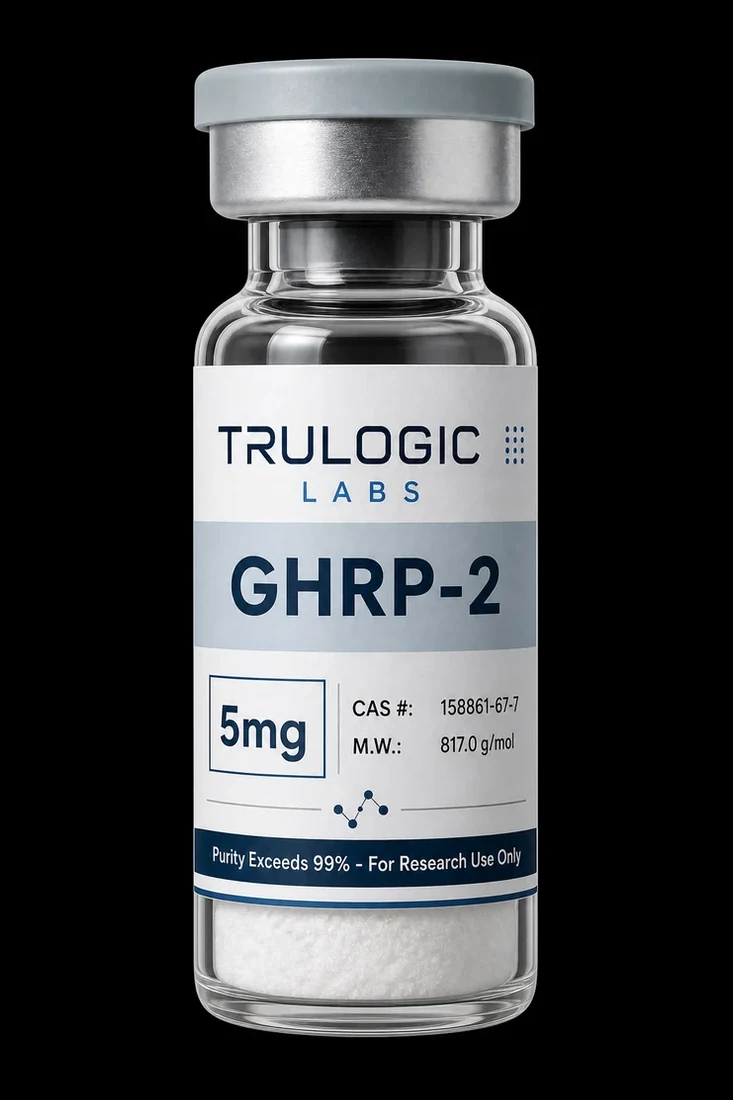
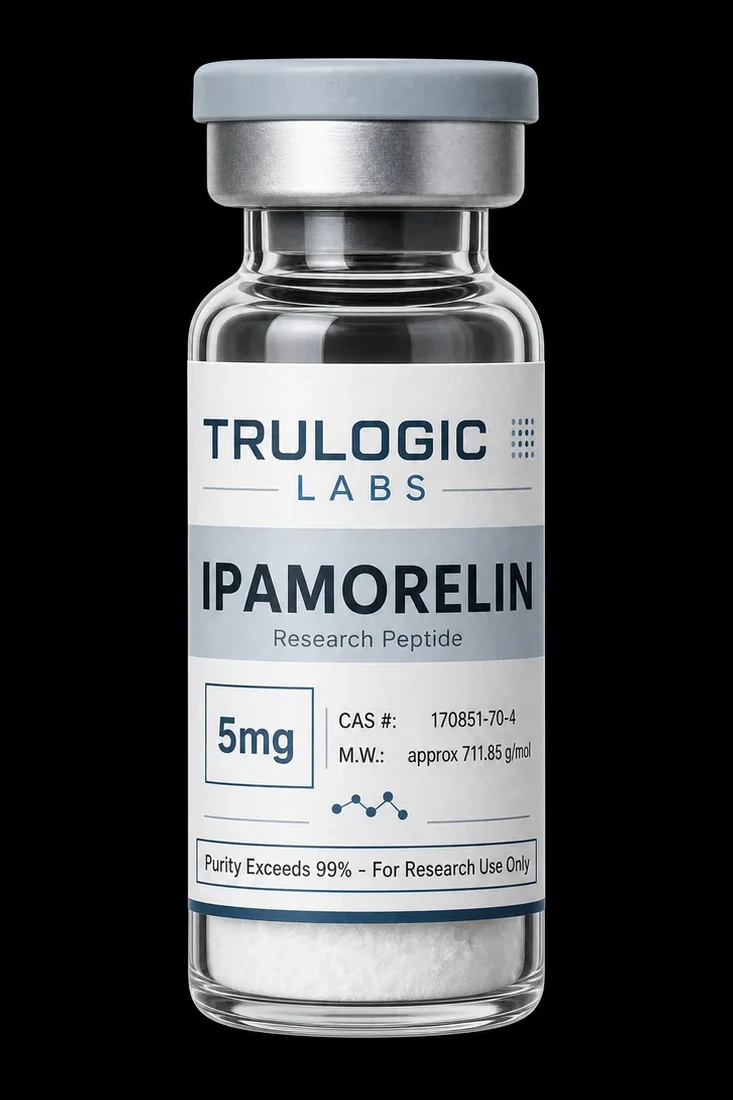
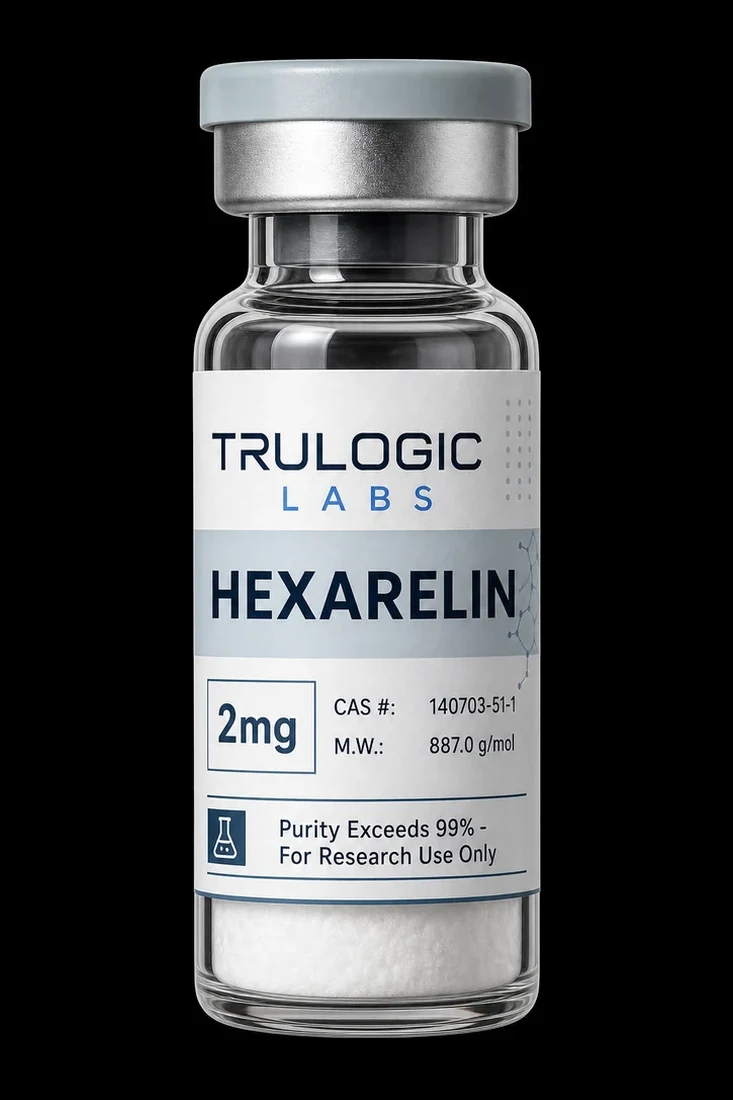
GHRP-6 has been studied alongside GHRH analogs such as sermorelin and CJC-1295, and is frequently compared with GHRP-2, ipamorelin, and hexarelin in secretagogue research.
At a glance
Research strengths
- Historically important reference compound for ghrelin-receptor research
- Well-documented growth hormone-releasing activity in models
- Studied for combined effects with GHRH-pathway peptides
- Extensive preclinical literature base
Limitations & cautions
- Pronounced appetite-stimulating signal reported in research
- Short reported half-life in pharmacokinetic studies
- Possible cortisol and prolactin elevation noted
- Not approved for human therapeutic use