Overview
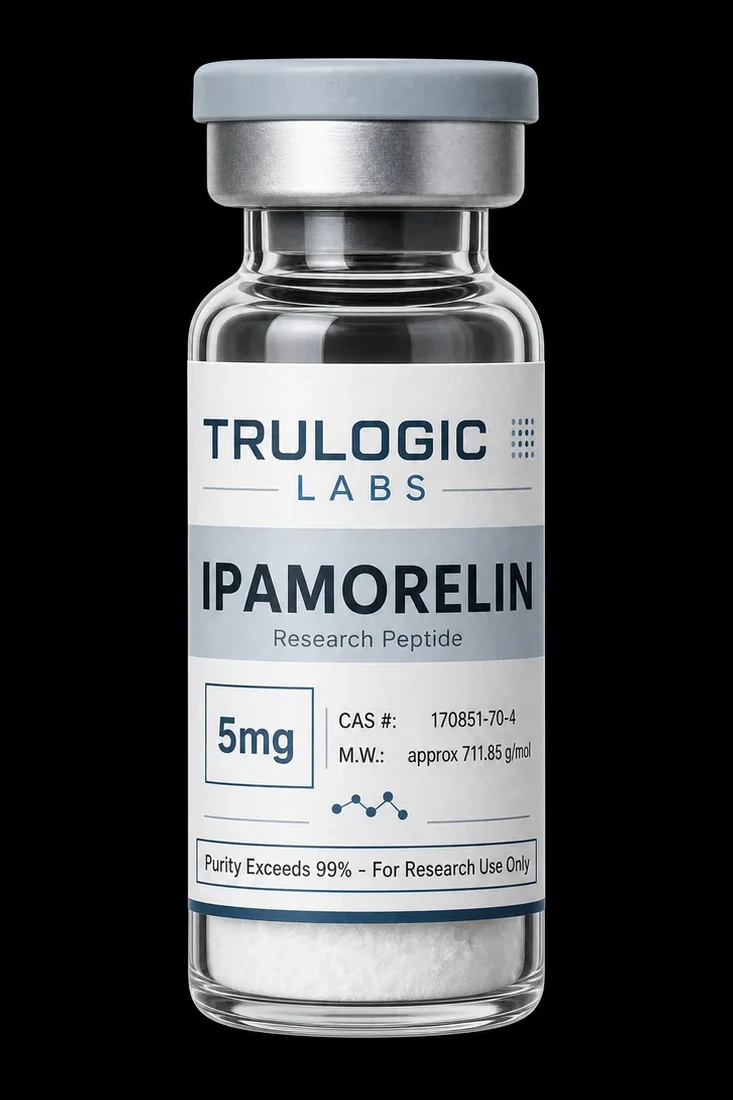
Ipamorelin is a synthetic pentapeptide and one of the growth hormone secretagogues developed to stimulate growth hormone release through the ghrelin receptor pathway. It is often described in research as one of the more selective secretagogues, having been studied for its ability to prompt growth hormone release with comparatively little effect on cortisol or prolactin in research models. Its small size and selectivity have made it a frequent subject of comparison among GHRPs.
Mechanism of action
Ipamorelin binds to the growth hormone secretagogue receptor (GHS-R1a), the same receptor activated by the endogenous hormone ghrelin, on pituitary somatotrophs and the hypothalamus. Activation stimulates the release of stored growth hormone in a pulsatile manner. Unlike GHRH analogs, which act on the GHRH receptor, ipamorelin works through the ghrelin pathway; the two mechanisms are studied as complementary in their effects on growth hormone secretion. Its reported selectivity refers to minimal stimulation of adrenocorticotropic hormone and prolactin in research settings.
Research findings
Research models report stimulation of pulsatile growth hormone release via the GHS-R1a (ghrelin) receptor.,Studies describe a relatively selective profile, with limited effect on cortisol and prolactin compared with some earlier secretagogues.,Investigations have examined combined GHRH-analog plus secretagogue approaches, noting additive or synergistic GH release in research.,Effects on appetite via ghrelin-pathway activity have been noted, though to a lesser degree than ghrelin itself in some models.,Its small pentapeptide structure is frequently cited in structure-activity research on secretagogues.
Research context
In the research literature, ipamorelin is characterized by a plasma half-life commonly reported around two hours, reflecting its peptide nature and clearance. Reported study protocols and exposure ranges vary across investigations and models, and pharmacokinetic and pharmacodynamic behavior depends on the specific research system. High-level descriptors such as GH-release magnitude and selectivity are discussed at the level of general findings rather than individualized parameters. This is a research reference only. Not approved for human use outside regulated settings; consult the primary literature.
Handling & storage
Lyophilized peptide is typically stored frozen and protected from light and moisture in a controlled laboratory setting; reconstituted material is generally kept refrigerated and handled under standard aseptic laboratory practice. Label for research use only, keep away from heat, and dispose of per institutional protocols.
Reported safety signals
Research reports have noted possible transient effects associated with ghrelin-pathway activation, such as changes in appetite, as well as headache or injection-site reactions. Its relatively selective profile is cited as a reason for limited effects on cortisol and prolactin in studies. Human safety data are limited.
Studied alongside
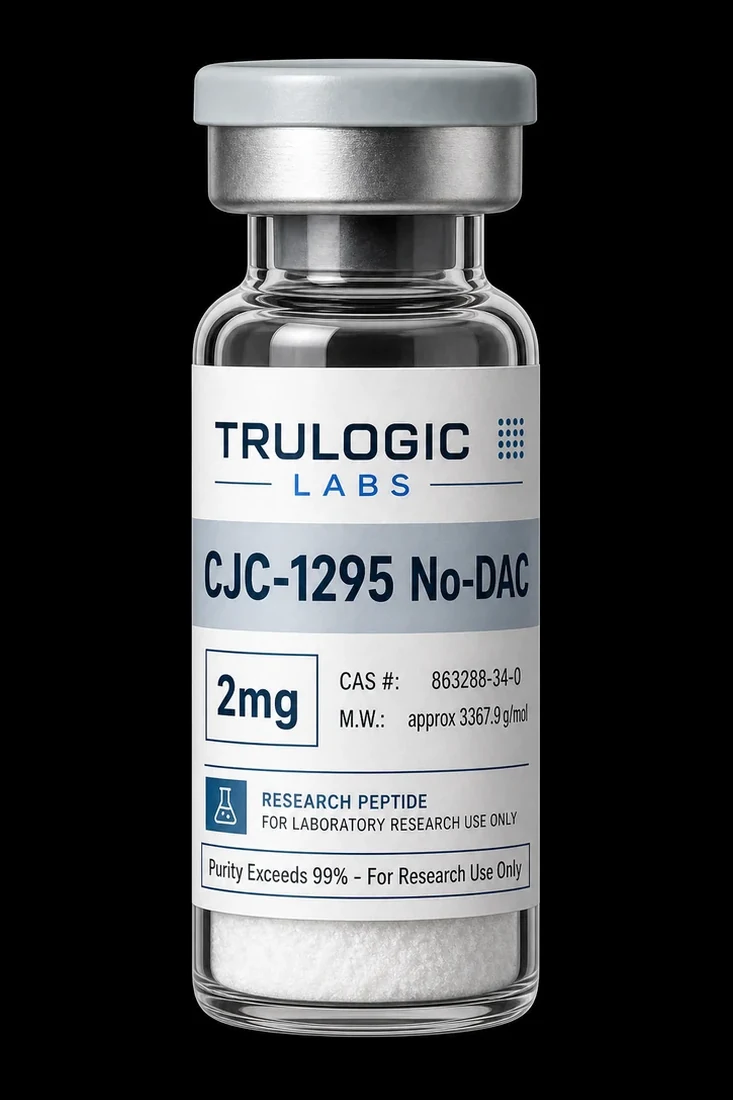
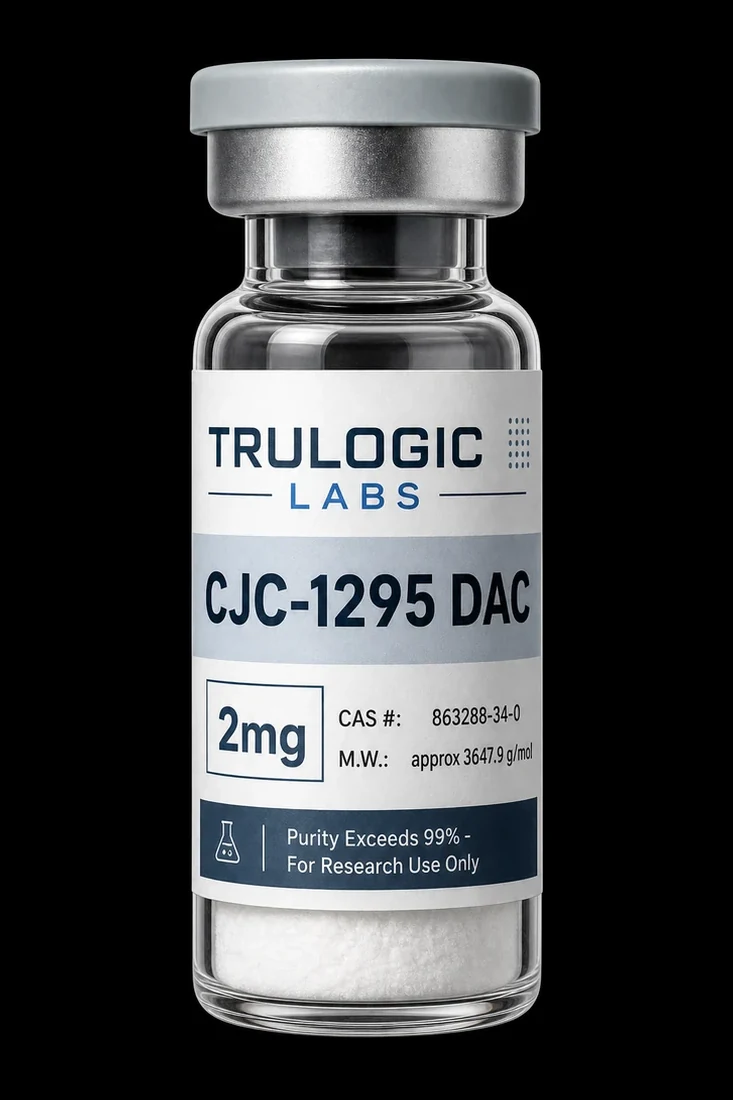
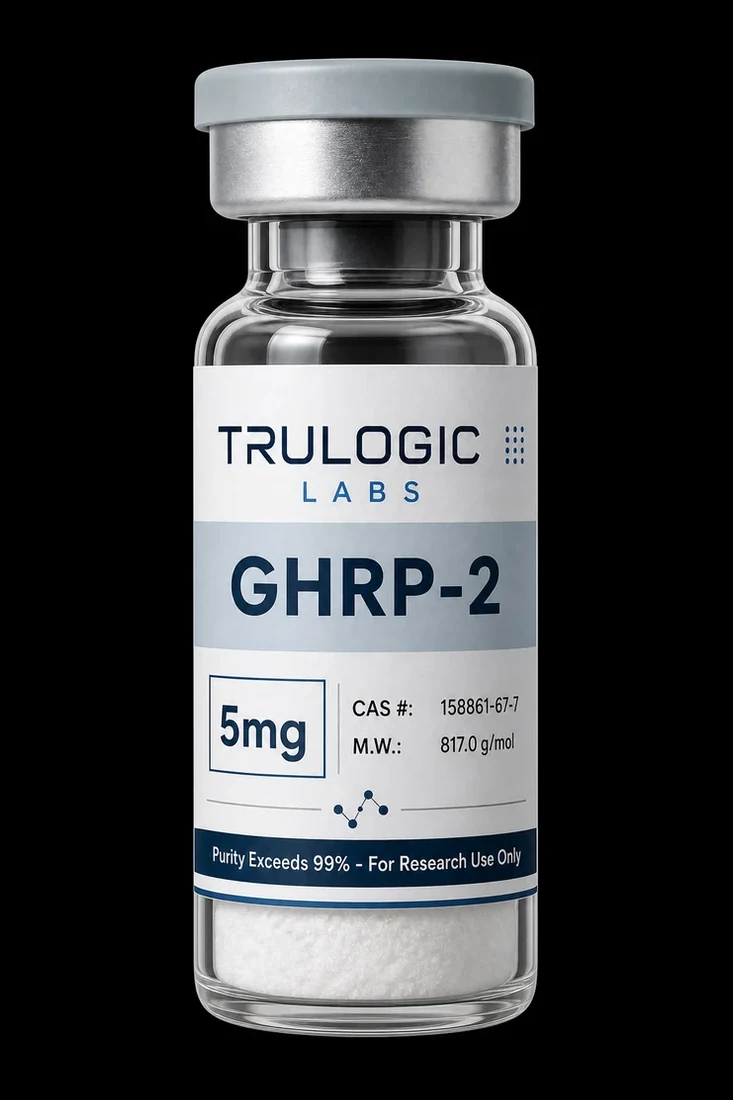
In research and discussion it is frequently combined conceptually with GHRH analogs such as CJC-1295 (DAC and no-DAC) and tesamorelin, since GHRH-receptor and ghrelin-receptor stimulation are studied as complementary; it is also grouped with related secretagogues like GHRP-2.
At a glance
Research strengths
- Relatively selective GH release with limited cortisol/prolactin effect in research
- Acts through the ghrelin pathway, complementary to GHRH analogs
- Preserves pulsatile, feedback-regulated GH secretion
- Small, well-studied pentapeptide structure
Limitations & cautions
- Short half-life owing to its peptide nature
- Depends on intact pituitary responsiveness
- Possible ghrelin-pathway effects such as appetite changes
- Limited human safety data outside research