Overview
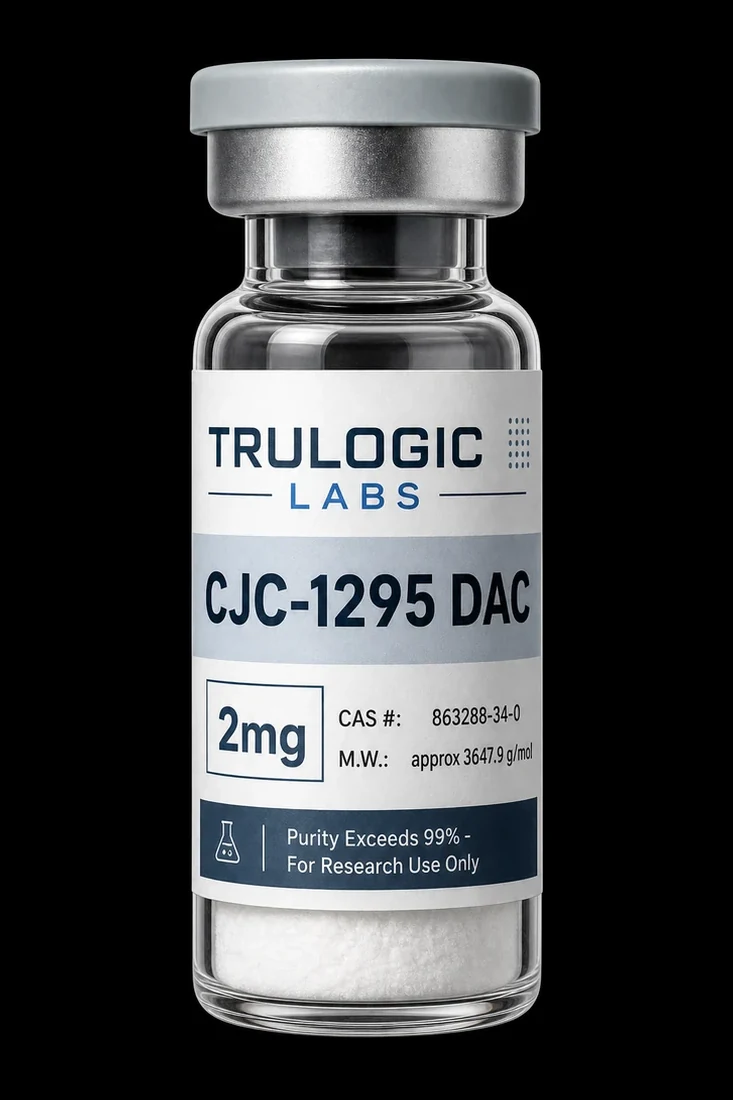
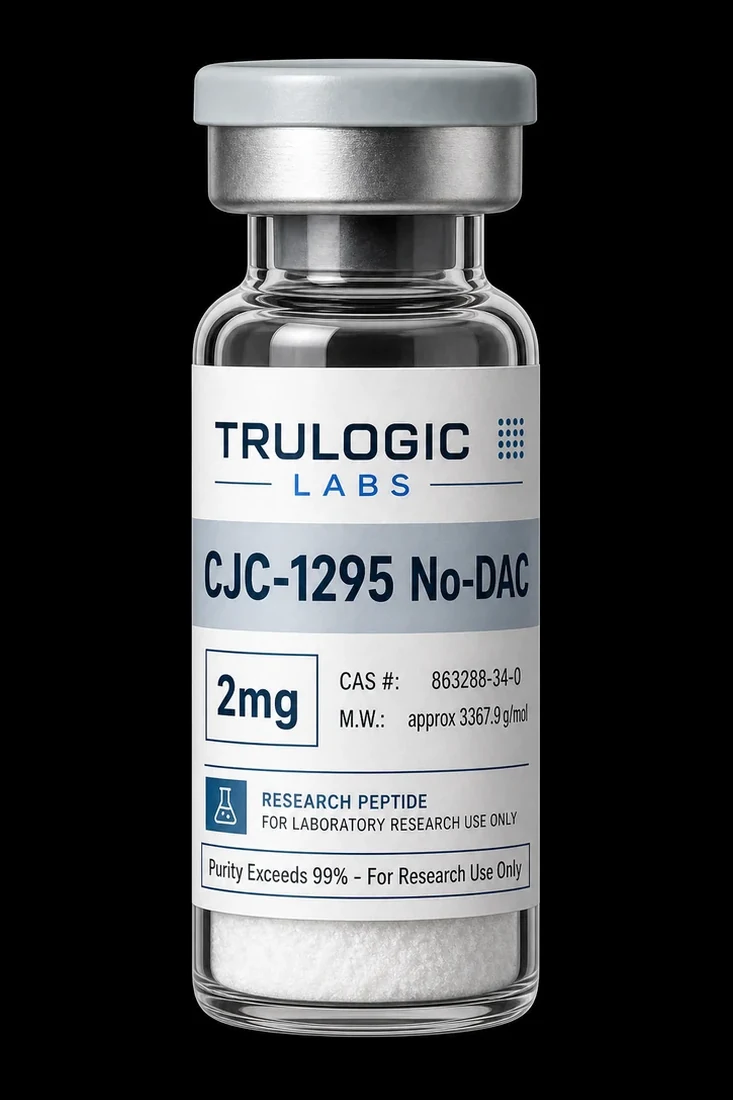
CJC-1295 No-DAC, commonly called Modified GRF(1-29) or Mod GRF, is a truncated GHRH analog comprising the bioactive first 29 amino acids of growth-hormone-releasing hormone with four amino acid substitutions that improve stability against enzymatic degradation. Because it lacks the Drug Affinity Complex of the DAC version, it does not bind albumin and is cleared relatively quickly. This short action has been studied as producing a more pulsatile, physiologic pattern of growth hormone stimulation.
Mechanism of action
CJC-1295 No-DAC binds GHRH receptors on pituitary somatotrophs to stimulate growth hormone synthesis and pulsatile release, in the same manner as native GHRH but with greater enzymatic stability from its substitutions. Without albumin binding, its circulating presence is brief, so its effect is a short, sharp stimulation of GH release rather than the sustained elevation seen with the DAC form. Research frequently studies it together with ghrelin-receptor secretagogues, as GHRH-receptor and ghrelin-receptor stimulation are described as complementary, producing additive GH release.
Research findings
Research describes stimulation of pulsatile growth hormone release via GHRH receptors with a short duration of action.,Its stabilizing substitutions are studied as extending activity relative to unmodified GRF(1-29) while remaining short-acting.,The pulsatile, physiologic GH profile is a frequently cited distinction from the sustained DAC form.,Combined GHRH-analog plus secretagogue research reports additive or synergistic GH release.,It shares the modified GRF(1-29) backbone of CJC-1295 DAC, differing by the absence of the DAC.
Research context
In the research literature, CJC-1295 No-DAC is characterized by a short half-life (commonly cited around half an hour), reflecting the absence of albumin binding and its peptide nature; this contrasts with the days-scale half-life of the DAC version. Reported study protocols and exposure ranges vary across investigations and models, and the pulsatile pharmacodynamic profile depends on the specific research system. High-level descriptors are discussed at the level of general findings rather than individualized parameters. This is a research reference only. Not approved for human use outside regulated settings; consult the primary literature.
Handling & storage
Lyophilized peptide is typically stored frozen and protected from light and moisture in a controlled laboratory setting; reconstituted material is generally kept refrigerated and handled under standard aseptic laboratory practice. Label for research use only, avoid heat and repeated freeze-thaw cycles, and dispose of per institutional protocols.
Reported safety signals
Research notes effects consistent with growth hormone axis stimulation, including possible flushing, headache, injection-site reactions, and transient changes in glucose handling. Its short action is discussed as producing a more physiologic pulsatile profile. Human safety data are limited.
Studied alongside
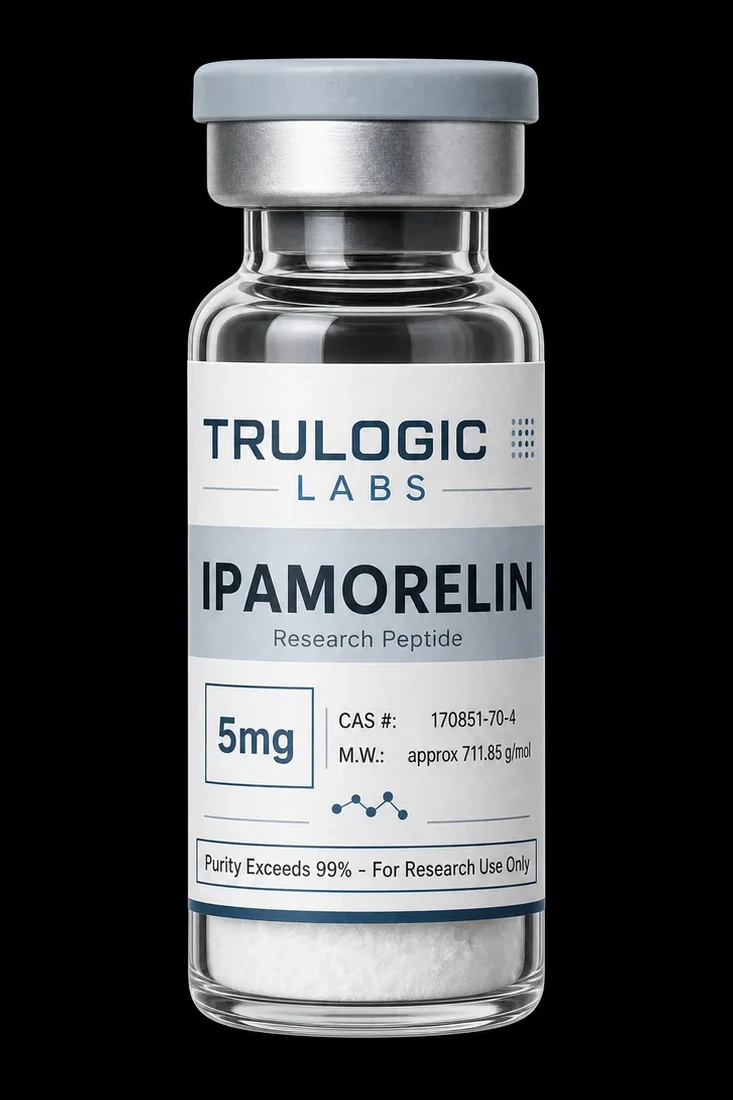
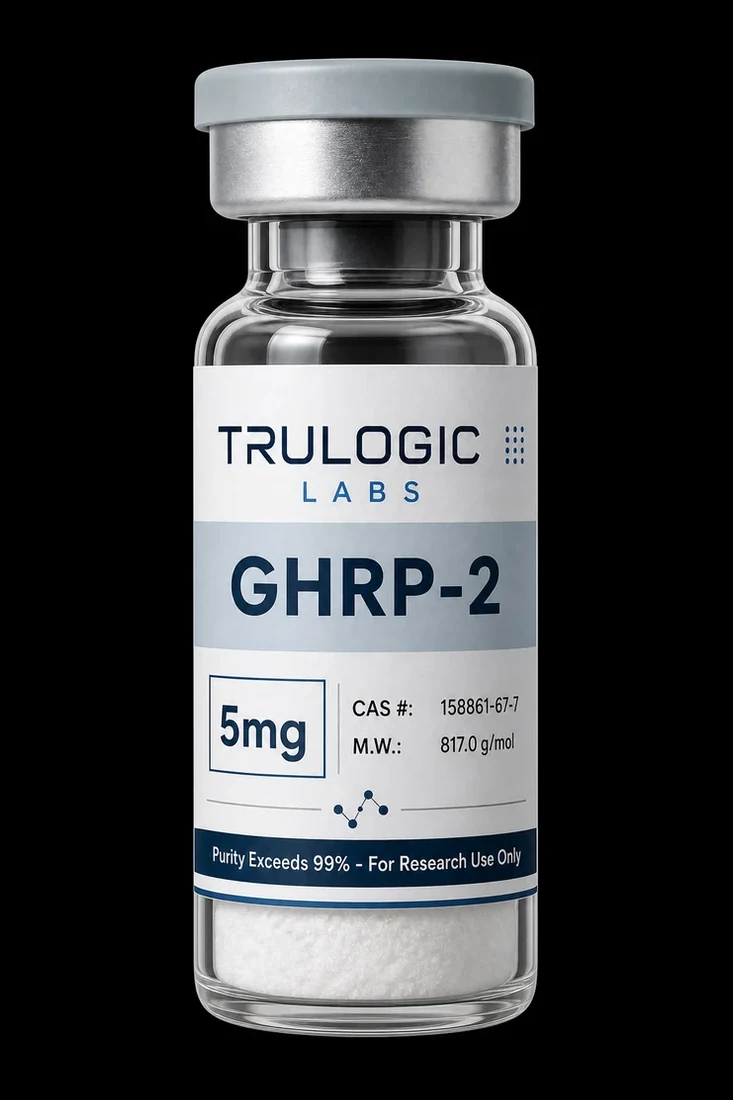
In research and discussion it is very frequently paired conceptually with ghrelin-receptor secretagogues such as ipamorelin and GHRP-2 to study complementary GH-axis stimulation, and it is directly compared with its DAC counterpart and with tesamorelin.
At a glance
Research strengths
- Short action mimics natural pulsatile GH release
- Stabilized modified GRF(1-29) backbone with improved durability
- Acts upstream on the pituitary, preserving feedback regulation
- Frequently studied in complementary combination with secretagogues
Limitations & cautions
- Short half-life owing to absence of albumin binding
- Effects depend on intact pituitary responsiveness
- GH-axis-related effects such as flushing and glucose changes
- Limited human safety data outside research