Overview
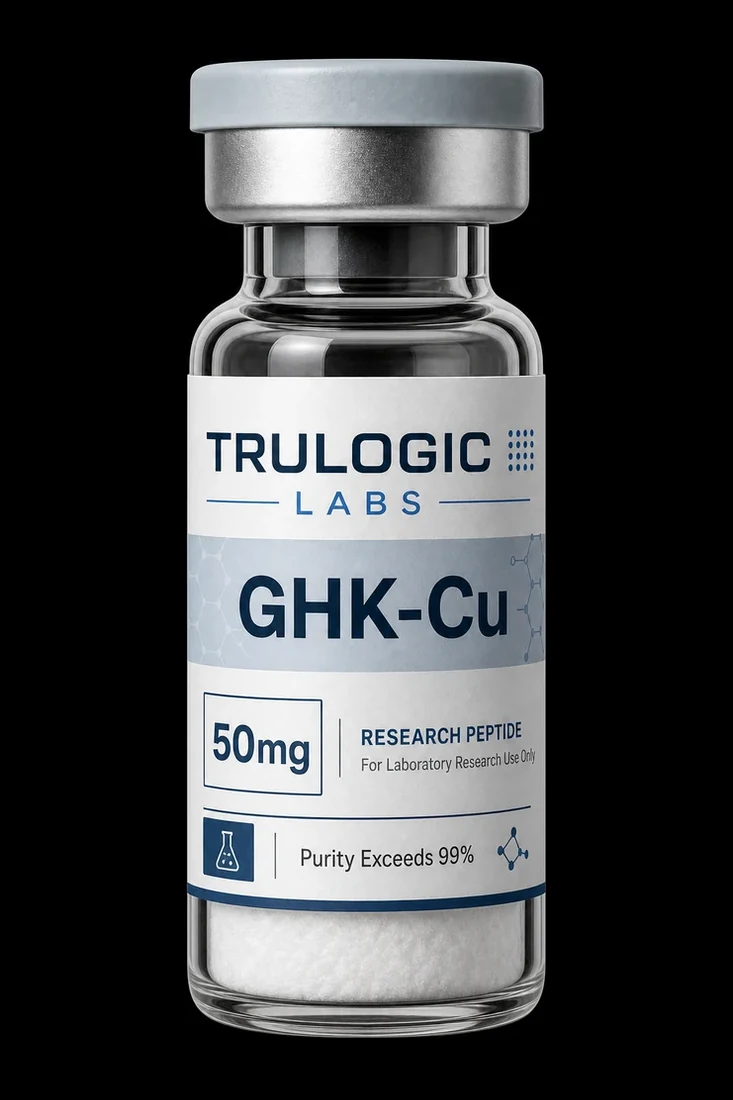
GHK-Cu (copper tripeptide-1) is the copper(II) complex of the human tripeptide glycyl-histidyl-lysine. The peptide occurs naturally in the body and its plasma level is reported to decrease with age. GHK and GHK-Cu have been studied for several decades in the context of skin biology, wound healing, and tissue remodeling, and the peptide is a common cosmetic ingredient. It is not approved as a systemic therapeutic by major regulators.
Mechanism of action
GHK has a high affinity for copper(II) ions, and the resulting complex is studied for its role in delivering copper to cells and influencing copper-dependent processes. Reported mechanisms include modulation of extracellular matrix synthesis and breakdown (collagen, elastin, glycosaminoglycans), antioxidant signaling, and broad effects on gene expression observed in transcriptomic studies. The peptide has been described as influencing the expression of many genes related to tissue repair.
Research findings
Studies report stimulation of collagen and extracellular matrix component synthesis in skin models.,Transcriptomic analyses describe broad effects on gene expression linked to tissue remodeling.,Cosmetic and dermatological research has examined effects on skin appearance and wound healing.,Reported antioxidant and anti-inflammatory signaling effects in cell-based work.,Plasma GHK levels are reported to decline with age, prompting interest in its biological role.
Research context
GHK-Cu is studied both topically and, in some experimental contexts, systemically. Pharmacokinetic parameters for systemic use are not well characterized in humans, and reported study designs vary across cosmetic, in vitro, and animal settings. Reported ranges differ substantially by route and model and are not directly transferable. This is a research reference only. Not approved for human use outside regulated settings; consult the primary literature.
Handling & storage
Lyophilized powder is typically stored cool or frozen, protected from light and moisture, in a laboratory setting. The copper complex can be sensitive to pH and oxidation; reconstituted material is generally handled cold per laboratory protocol. Follow institutional handling guidance.
Reported safety signals
Topical use in cosmetic studies is generally reported as well tolerated. Systemic safety is not well characterized, and copper handling is a relevant consideration in any research context.
Studied alongside
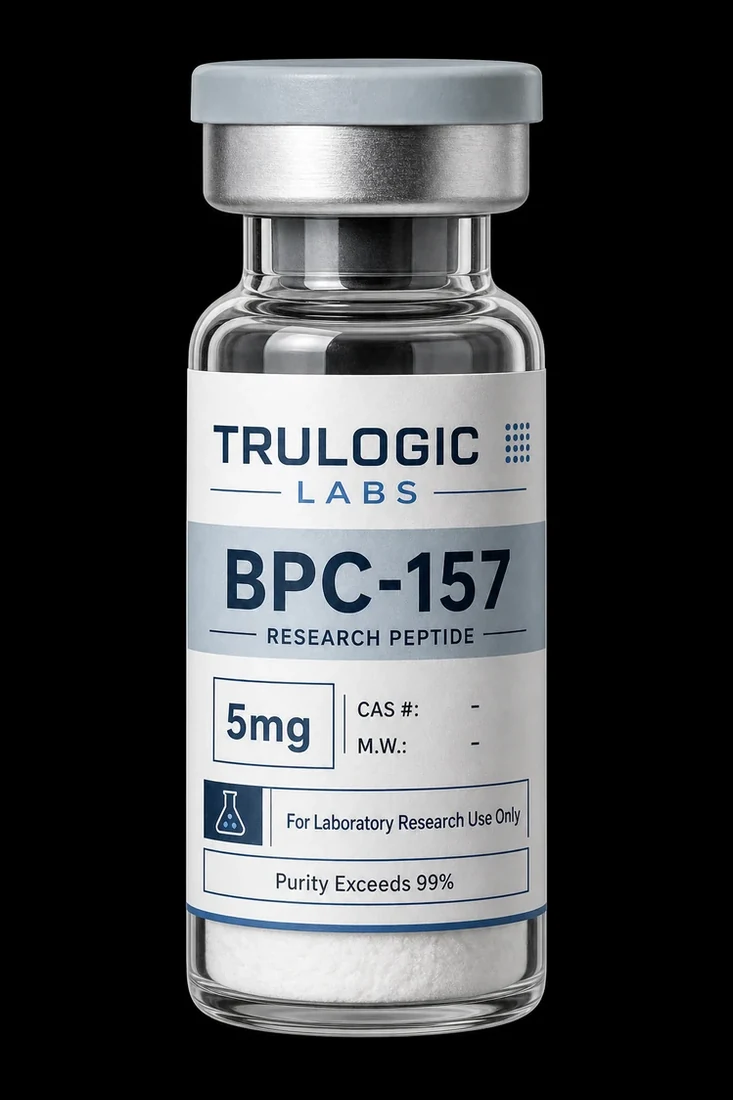
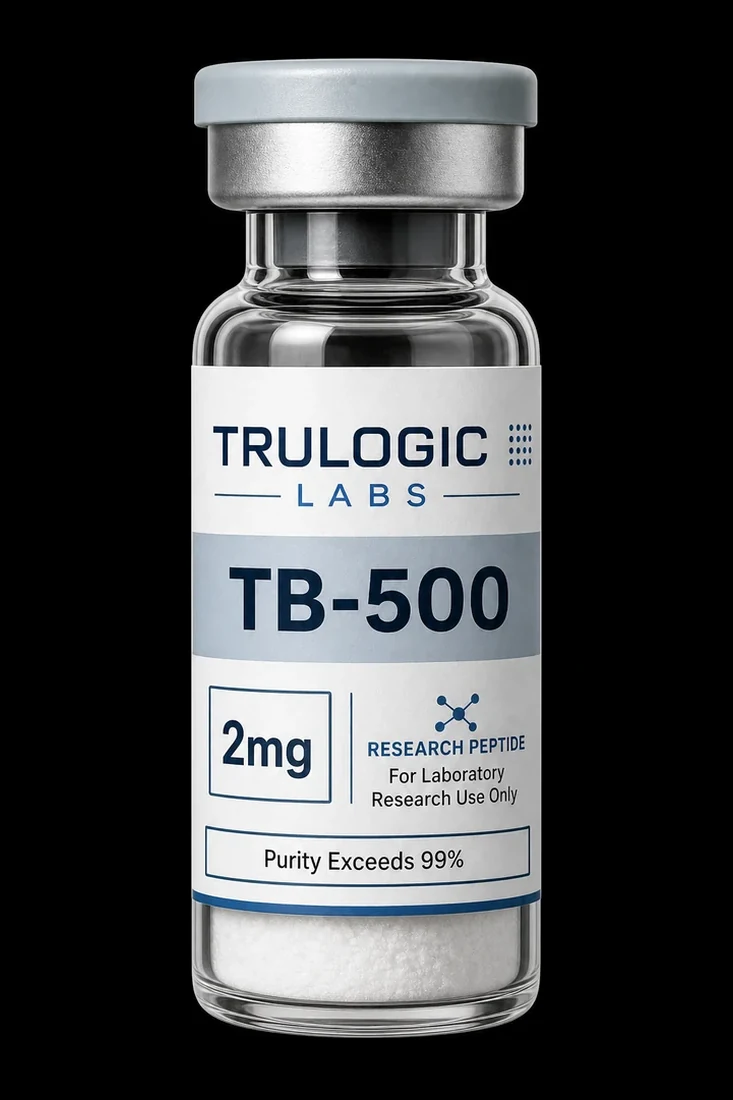
In research and formulation discussion GHK-Cu is sometimes examined alongside BPC-157 and TB-500 in tissue-repair contexts, and is studied with other matrix-active agents in skin research.
At a glance
Research strengths
- Naturally occurring human peptide with decades of study
- Well-documented role in extracellular matrix and skin biology
- Broad transcriptomic effects characterized in research
- Widely available and used as a cosmetic ingredient
Limitations & cautions
- Systemic pharmacokinetics not well characterized
- Not approved as a systemic therapeutic
- Copper content requires careful handling considerations
- Much evidence is topical or in vitro rather than systemic human data