Overview
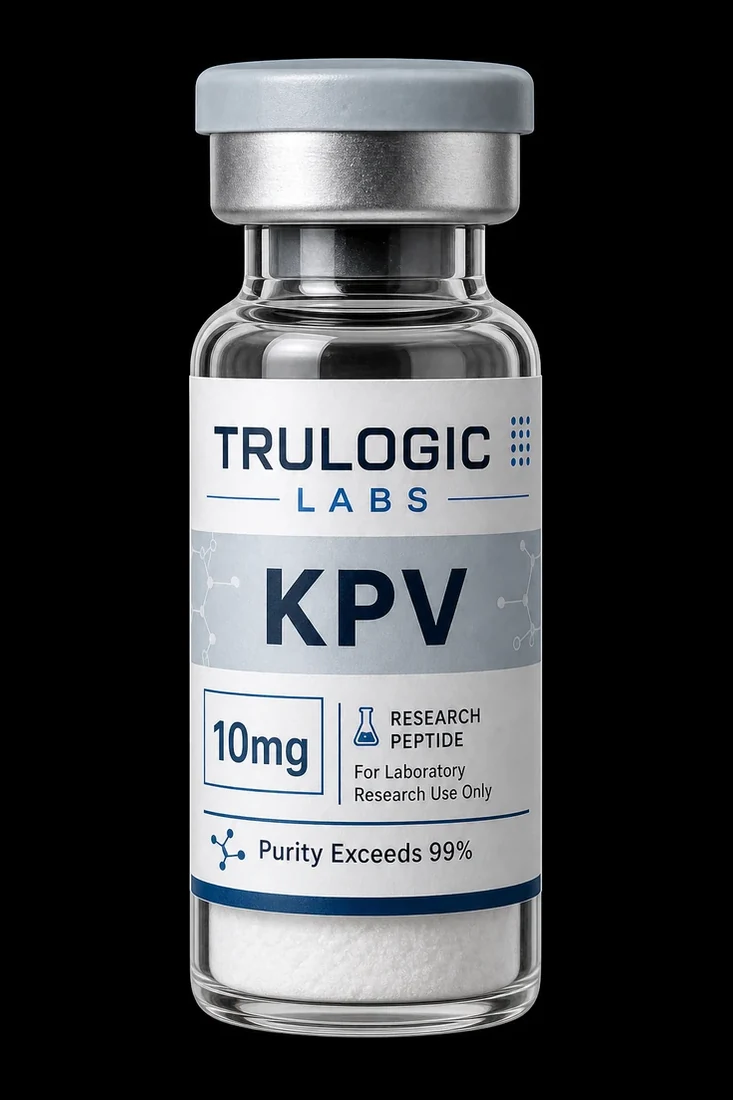
KPV is a small tripeptide corresponding to the C-terminal three residues of alpha-melanocyte-stimulating hormone (alpha-MSH), a hormone with established roles in pigmentation and inflammation. KPV retains some of the reported anti-inflammatory activity of the parent hormone while lacking its melanocortin pigmentary effects in several models. It is investigated primarily in preclinical inflammation research and is not approved for human therapeutic use.
Mechanism of action
Reported mechanisms focus on anti-inflammatory signaling. Studies describe interference with pro-inflammatory pathways such as NF-κB signaling and reductions in inflammatory cytokine production. Some research suggests KPV can be taken up by cells, including intestinal epithelial and immune cells, and may act partly independently of classical melanocortin receptors. The full mechanistic picture remains under investigation.
Research findings
Cell-based studies report reduced production of pro-inflammatory cytokines.,Animal models of colitis have examined KPV for anti-inflammatory effects in the gut.,Research describes modulation of NF-κB and related inflammatory signaling.,Some studies report cellular uptake via peptide transporters in intestinal models.,Controlled human clinical data are limited.
Research context
KPV is studied via several routes in preclinical work, including oral and local delivery in gut inflammation models. Human pharmacokinetics are not well characterized, and reported study ranges and designs vary by model and route. These preclinical parameters are not directly transferable to people. This is a research reference only. Not approved for human use outside regulated settings; consult the primary literature.
Handling & storage
Lyophilized powder is typically stored frozen, protected from light and moisture, in a laboratory setting. Reconstituted peptide is generally handled cold and used within a defined window per laboratory protocol. Follow institutional handling guidance.
Reported safety signals
Human safety is not well characterized owing to limited controlled studies. Preclinical reports generally describe tolerability, which does not establish human safety.
Studied alongside
In research discussion KPV is sometimes examined alongside BPC-157 in gastrointestinal and tissue-repair contexts, and is occasionally referenced with LL-37 in host-defense and inflammation research.
At a glance
Research strengths
- Derived from a well-characterized parent hormone (alpha-MSH)
- Reported anti-inflammatory activity without pigmentary effects in models
- Small, stable, well-defined tripeptide sequence
- Studied in relevant gut-inflammation models
Limitations & cautions
- Limited human clinical evidence
- Not approved for human therapeutic use
- Pharmacokinetics not well characterized
- Mechanism not fully resolved