Overview
Tesamorelin is a synthetic peptide analog of the first 44 amino acids of human GHRH, modified with a trans-3-hexenoic acid group at the N-terminus to improve stability against enzymatic degradation. It has been investigated primarily in the context of growth hormone axis function, with the most extensively studied application being reduction of excess visceral adipose tissue in adults with HIV-associated lipodystrophy. Because it works upstream by prompting the pituitary, the resulting growth hormone output remains subject to physiological feedback regulation.
Mechanism of action
Tesamorelin binds to growth-hormone-releasing hormone receptors on somatotroph cells of the anterior pituitary, stimulating the synthesis and pulsatile secretion of endogenous growth hormone. The elevated growth hormone in turn raises circulating insulin-like growth factor-1 (IGF-1). The N-terminal modification slows breakdown by peptidases, extending its activity relative to native GHRH. Effects on visceral fat are thought to be mediated indirectly through the growth hormone / IGF-1 axis and its lipolytic actions.
Research findings
Clinical research has reported reductions in visceral adipose tissue in adults with HIV-associated lipodystrophy over treatment periods of several months.,Studies have documented increases in circulating IGF-1 consistent with stimulation of the growth hormone axis.,Some research has examined effects on lipid profiles, including triglyceride measures, with mixed and population-dependent results.,Exploratory work has looked at cognitive and liver-fat endpoints, though these areas remain less well characterized.,The preservation of pulsatile, feedback-regulated GH release is frequently cited as a distinction from administration of exogenous growth hormone.
Research context
In the research literature, tesamorelin is characterized by a relatively short plasma half-life (commonly reported in the tens of minutes), which is a function of its peptide nature and enzymatic clearance despite the N-terminal stabilizing modification. Reported study protocols and exposure ranges vary considerably across investigations and populations, and the pharmacokinetic and pharmacodynamic profiles depend on the specific research model. High-level pharmacokinetic descriptors such as time-to-peak and IGF-1 response are discussed at the level of general findings rather than individualized parameters. This is a research reference only. Not approved for human use outside regulated settings; consult the primary literature.
Handling & storage
Lyophilized peptide is typically stored frozen and protected from light and moisture in a controlled laboratory setting; reconstituted material is generally kept refrigerated and handled under standard aseptic laboratory practice. Material should be labeled for research use, kept away from heat sources, and disposed of according to institutional protocols.
Reported safety signals
Research and clinical reports have described injection-site reactions, joint discomfort, fluid retention or edema, and changes in glucose handling, consistent with effects on the growth hormone axis. Tolerability profiles differ across studies and populations.
Studied alongside
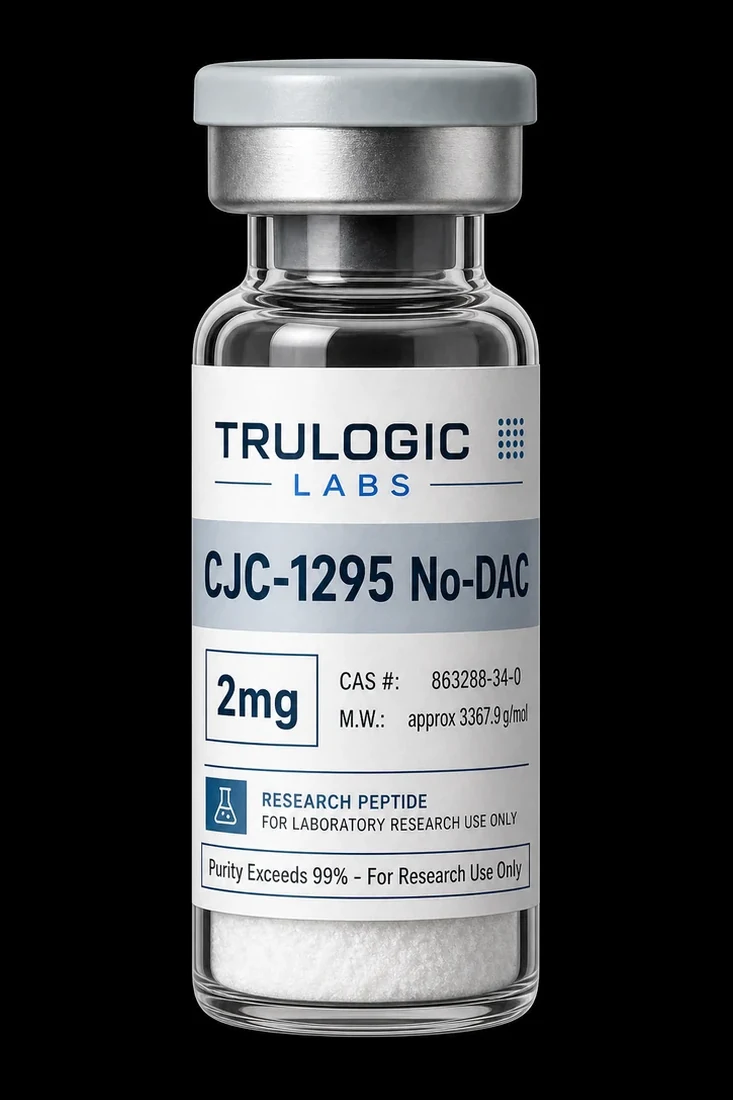
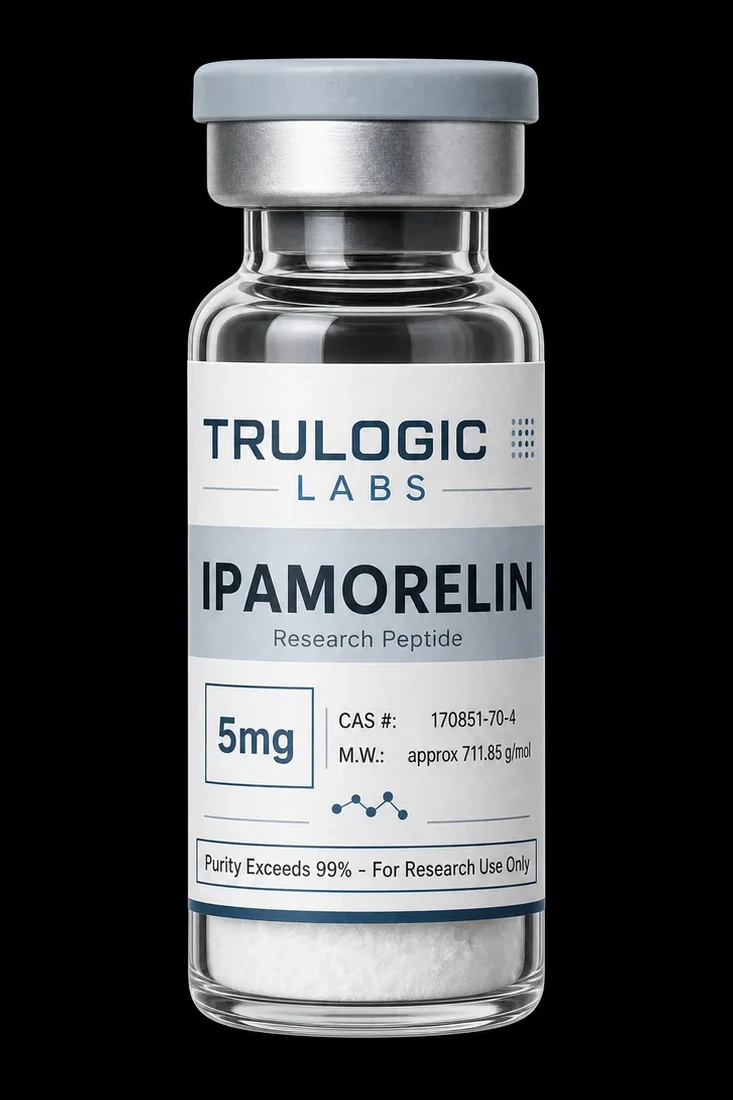
In research and discussion it is frequently compared and grouped with other GHRH analogs and growth hormone secretagogues such as CJC-1295 (DAC and no-DAC forms) and ghrelin-mimetic secretagogues like ipamorelin and GHRP-2; some literature contrasts it with direct recombinant growth hormone (HGH 191AA).
At a glance
Research strengths
- Acts upstream on the pituitary, preserving feedback-regulated and pulsatile GH release
- Among the better-characterized GHRH analogs in formal clinical research
- Has a defined and studied application in a specific clinical population
- N-terminal modification improves stability relative to native GHRH
Limitations & cautions
- Short plasma half-life owing to its peptide nature
- Effects depend on intact pituitary responsiveness
- Reported adverse effects related to the GH axis (fluid retention, joint discomfort, glucose changes)
- Most rigorous evidence is limited to specific clinical populations