Overview
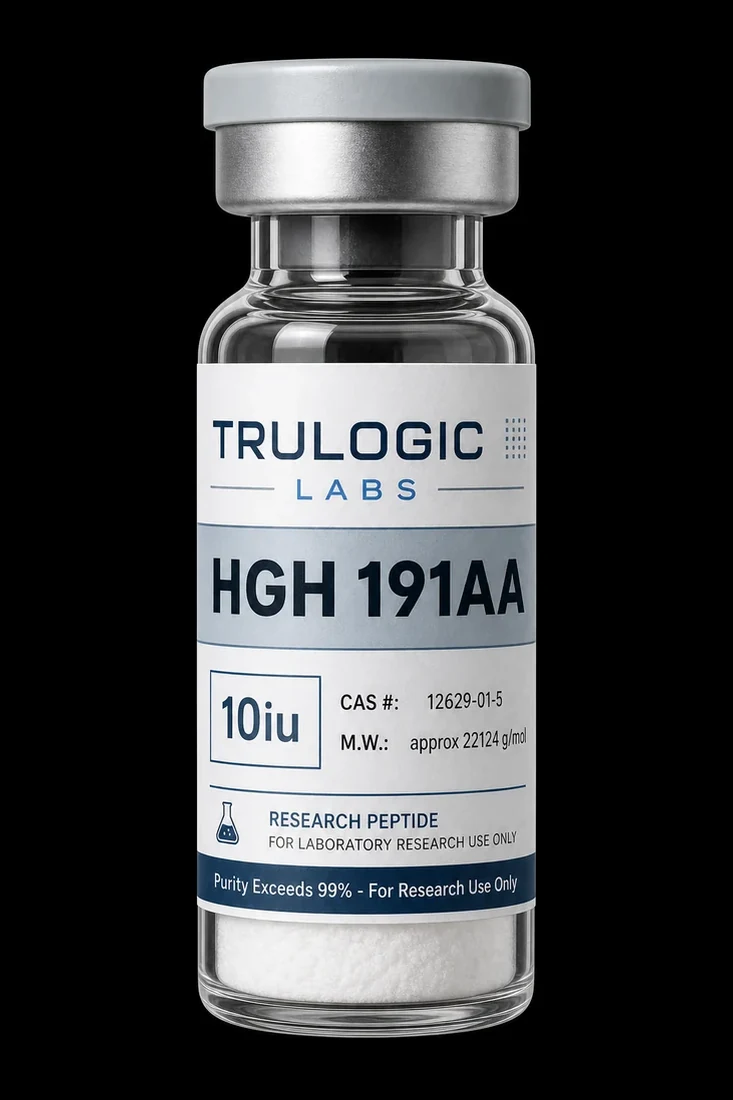
HGH 191AA refers to recombinant human growth hormone (somatropin) manufactured to replicate exactly the 191-amino-acid sequence of the hormone secreted by the anterior pituitary. Unlike GHRH analogs or secretagogues, it supplies growth hormone directly rather than prompting endogenous release. Somatropin is a controlled prescription medicine in most jurisdictions, and its clinical study has centered on conditions of growth hormone deficiency in children and adults.
Mechanism of action
Somatropin acts on the growth hormone receptor, a member of the cytokine receptor superfamily, on target tissues throughout the body. Receptor activation triggers JAK2/STAT signaling and stimulates hepatic and peripheral production of insulin-like growth factor-1 (IGF-1), which mediates many of the anabolic and growth-promoting effects. Growth hormone also exerts direct metabolic actions, including effects on lipolysis and carbohydrate metabolism. Because it is supplied exogenously, it does not depend on pituitary responsiveness and is not subject to the same upstream feedback as secretagogue approaches.
Research findings
Recombinant human growth hormone has a long-established research and clinical record in the treatment of pediatric and adult growth hormone deficiency.,Studies document elevation of circulating IGF-1 following administration.,Research has examined effects on body composition, including lean mass and fat distribution, in deficient populations.,Investigations have characterized metabolic effects on lipids and glucose handling, including potential for insulin resistance at higher exposures.,Its identity to the native sequence (191 amino acids) is a defining manufacturing distinction from earlier or alternate forms.
Research context
In the research literature, somatropin is characterized by a circulating half-life on the order of a few hours after parenteral administration, while its downstream biological effects, mediated substantially through IGF-1, persist longer. Reported study exposures and protocols vary widely by clinical indication and population, and pharmacokinetic parameters depend on the research or clinical model. Because it is a controlled prescription hormone, regulatory and medical oversight frameworks govern any human use, and high-level descriptors here are not a substitute for prescribing information. This is a research reference only. Not approved for human use outside regulated settings; consult the primary literature.
Handling & storage
Lyophilized recombinant protein is typically stored refrigerated or frozen and protected from light in a controlled laboratory or pharmacy setting; reconstituted material is generally kept refrigerated and used within a limited window per stability data. The protein is sensitive to heat, agitation, and freeze-thaw cycles. Handle under standard aseptic laboratory practice and dispose of per institutional protocols.
Reported safety signals
Clinical literature describes fluid retention and edema, joint and muscle discomfort, carpal tunnel-type symptoms, and effects on glucose tolerance including insulin resistance. Adverse-effect profiles are dose- and population-dependent and are managed under medical supervision in approved settings.
Studied alongside
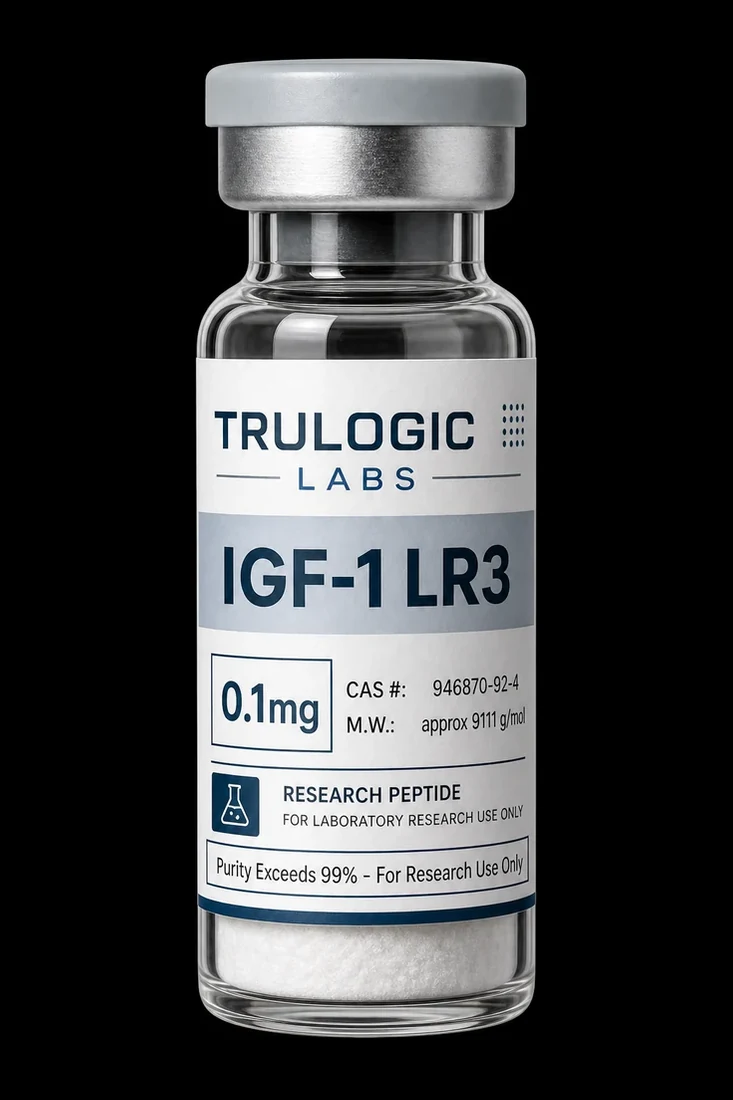
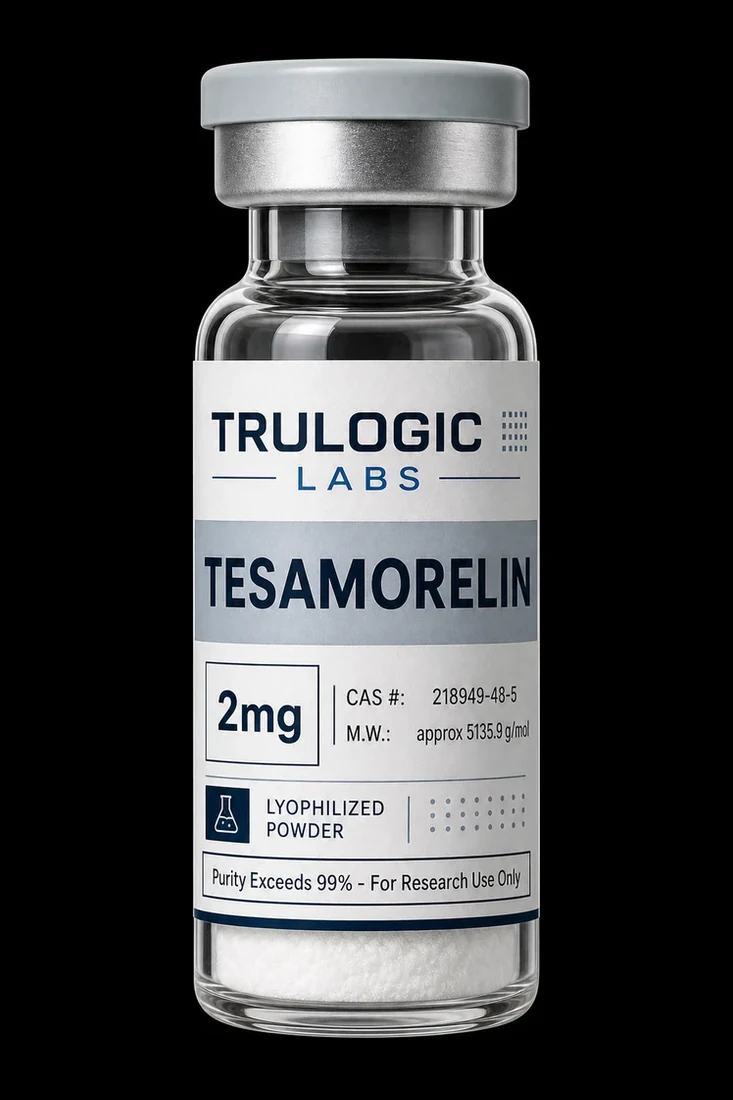
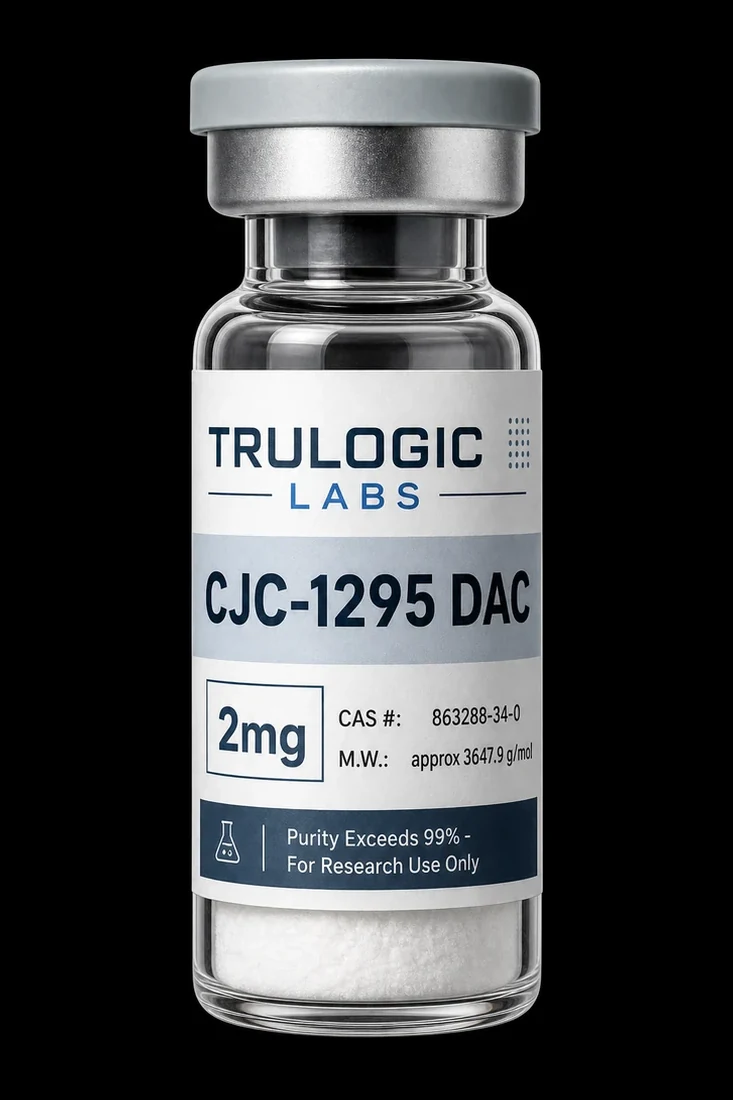
In the literature it serves as a reference comparator for GHRH analogs (tesamorelin, CJC-1295) and growth hormone secretagogues (ipamorelin, GHRP-2); IGF-1 LR3 is sometimes discussed in relation to it as a downstream mediator of growth hormone’s effects.
At a glance
Research strengths
- Sequence-identical to endogenous human growth hormone
- Extensive, long-standing clinical and research evidence base
- Acts directly and independently of pituitary responsiveness
- Well-defined approved indications in deficiency states
Limitations & cautions
- Controlled prescription hormone subject to strict regulation
- Bypasses natural pulsatile, feedback-regulated secretion
- Documented metabolic risks including impaired glucose tolerance
- Sensitive protein requiring careful cold-chain handling