Overview
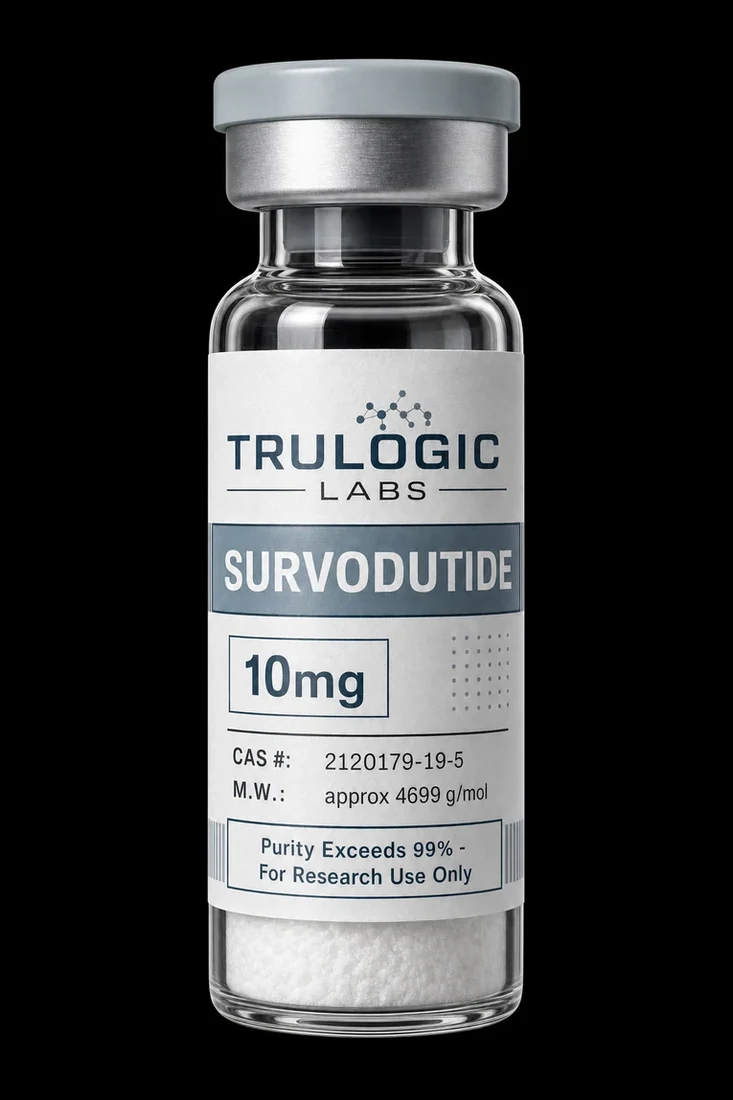
Survodutide is an investigational single-molecule peptide that acts as a dual agonist at the glucagon-like peptide-1 (GLP-1) receptor and the glucagon receptor. It belongs to the emerging class of glucagon-containing co-agonists that pair incretin signaling with glucagon-driven energy expenditure. The compound is acylated to extend its circulating half-life for once-weekly administration in research settings.
Research interest centers on the combination of appetite suppression via GLP-1 with glucagon-mediated effects on energy expenditure and hepatic lipid metabolism, making the liver a particular focus of investigation.
Mechanism of action
Survodutide co-activates the GLP-1 and glucagon receptors, both class B G-protein-coupled receptors. GLP-1 receptor activation enhances glucose-dependent insulin secretion, slows gastric emptying, and suppresses appetite, while glucagon receptor activation is associated with increased energy expenditure, lipolysis, and effects on hepatic lipid handling.
Research suggests the glucagon arm may contribute to reductions in liver fat and increases in energy expenditure, while the GLP-1 arm counterbalances glucagon’s tendency to raise blood glucose by promoting insulin secretion. Achieving a favorable balance between the two activities is central to the molecule’s design and remains under active study.
Research findings
- Investigated in phase 1 and phase 2 trials for body-weight reduction in adults with obesity.
- Studied for metabolic dysfunction-associated steatohepatitis and reductions in liver fat content.
- Examined for glycemic effects in metabolic research.
- Investigated for effects on lipid and other cardiometabolic markers.
- Dose-ranging research has explored tolerability and the contribution of glucagon receptor agonism.
Research context
Reported pharmacokinetics indicate a half-life on the order of roughly one week, consistent with once-weekly schedules used in trials. As an investigational compound, published dosing ranges and titration frequencies vary across studies and are described at a high level only, generally escalated gradually to improve tolerability; specifics differ by trial. No regimen, concentration, or preparation detail is provided here. This is a research reference only. These compounds are not approved for human use outside of regulated clinical settings; consult the primary literature.
Handling & storage
In laboratory settings, the lyophilized peptide is generally stored frozen (commonly -20°C or colder) and protected from light and moisture. Reconstituted solutions of peptides in this class are typically refrigerated at 2-8°C and reported to have limited stability. Repeated freeze-thaw cycles are generally avoided to preserve peptide integrity. No concentration or preparation guidance is provided.
Reported safety signals
Reported adverse effects in clinical research are predominantly gastrointestinal, including nausea, vomiting, and diarrhea, typically most pronounced during dose escalation. Dose-dependent increases in heart rate have been reported, attributed partly to glucagon receptor activity. As an investigational agent, its long-term safety profile is not yet established and continues to be characterized in ongoing trials.
Studied alongside
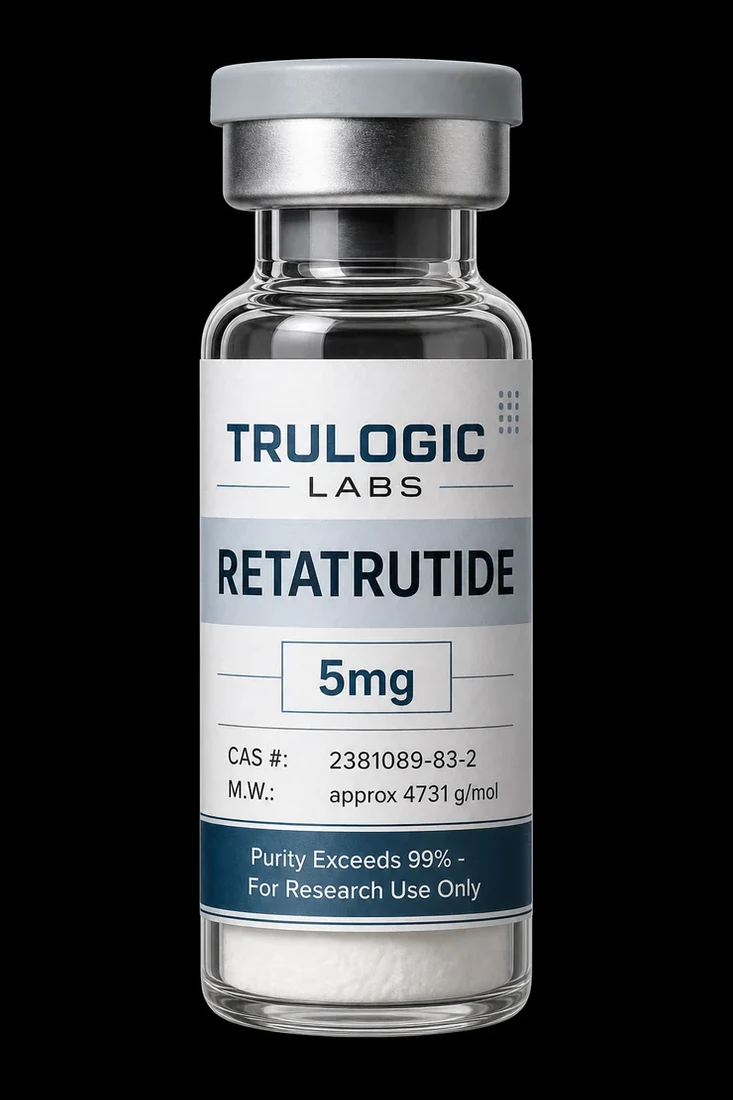
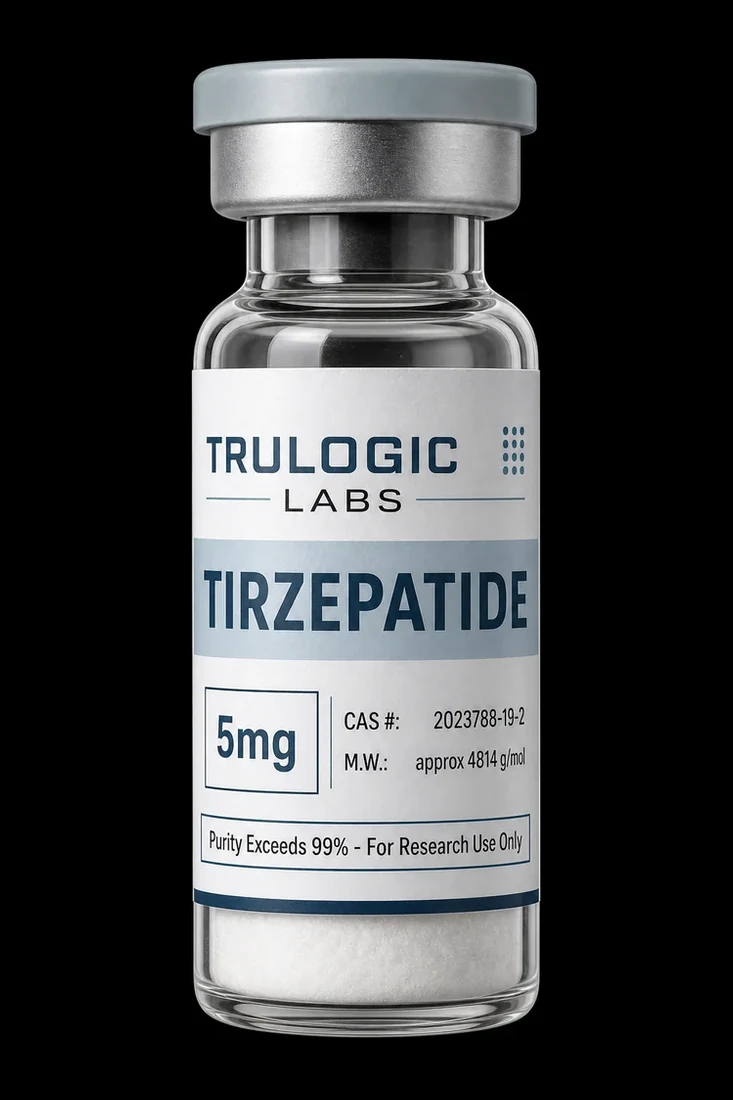
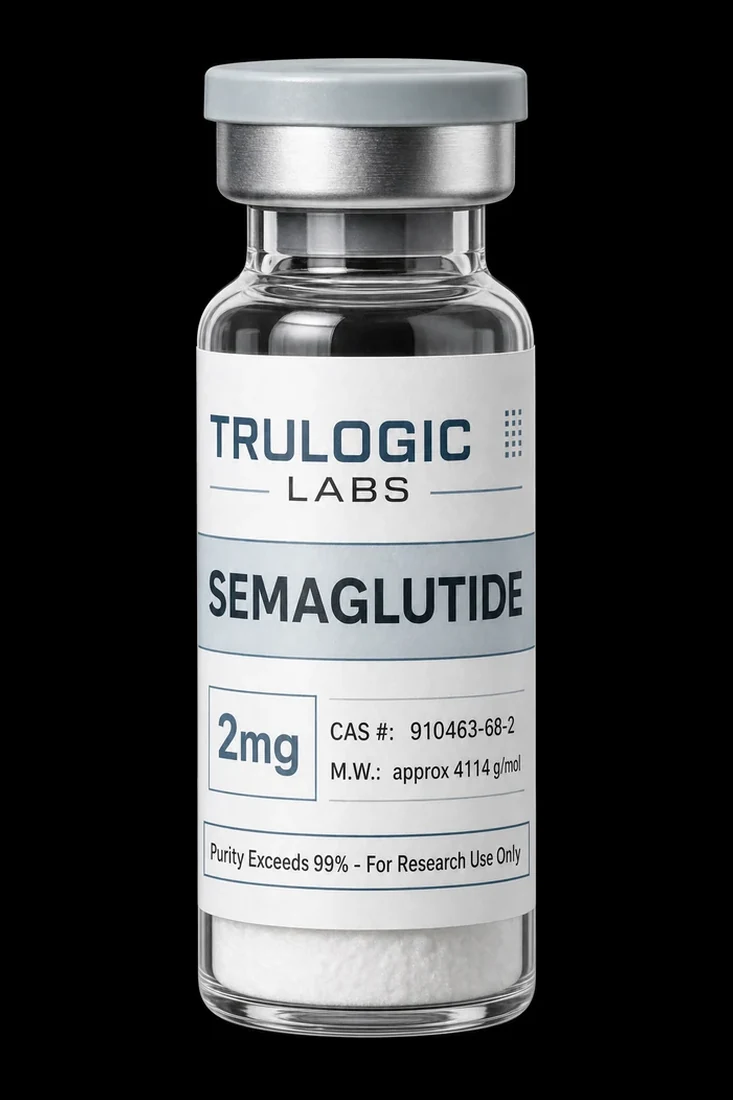
Survodutide is generally discussed in research alongside other glucagon-containing co-agonists such as the triple agonist retatrutide, and compared with the dual incretin agonist tirzepatide and the GLP-1 receptor agonist semaglutide. The amylin analog cagrilintide is referenced within the broader landscape of multi-mechanism metabolic compounds under study.
At a glance
Research strengths
- Dual GLP-1/glucagon mechanism studied for weight and liver-fat effects
- Glucagon arm investigated for hepatic and energy-expenditure benefits
- Long half-life supports once-weekly study schedules
- Active focus in steatohepatitis and obesity research
Limitations & cautions
- Investigational — not approved, long-term safety unestablished
- Dose-dependent heart-rate increases reported
- Gastrointestinal adverse effects common during titration
- Glucagon signaling adds complexity to glycemic balance