Overview
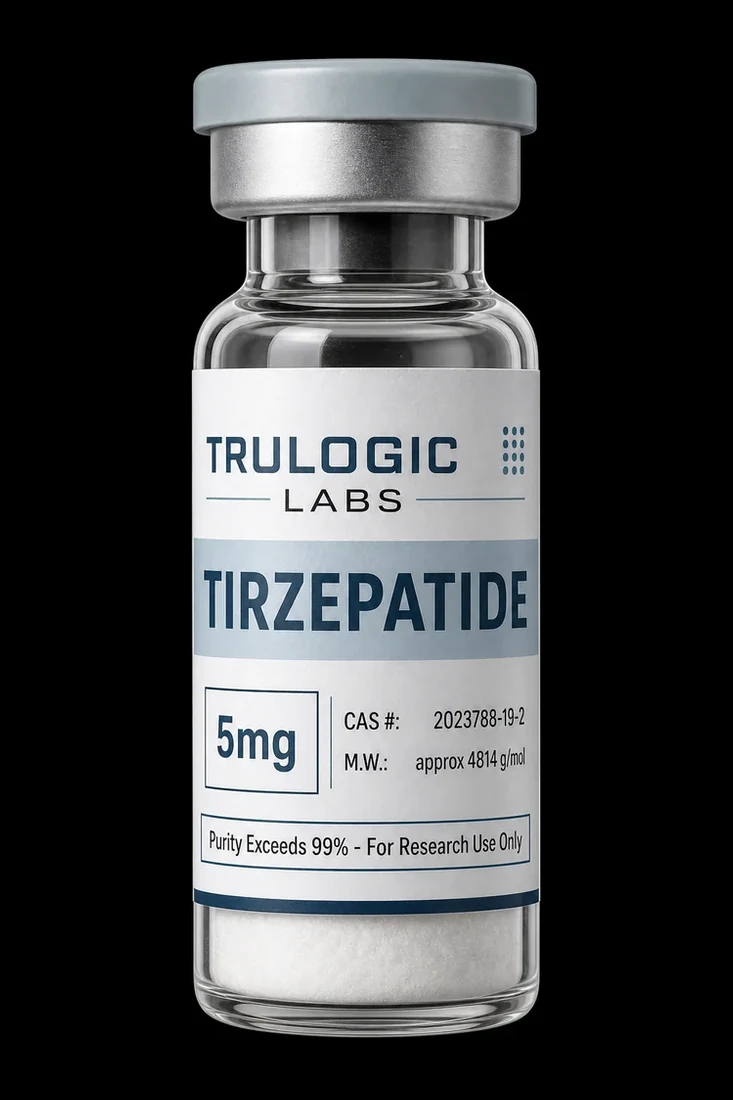
Tirzepatide is a synthetic linear peptide engineered from the native glucose-dependent insulinotropic polypeptide (GIP) backbone, modified to confer balanced agonism at both the GIP and glucagon-like peptide-1 (GLP-1) receptors. It belongs to the incretin-mimetic drug class and is the first marketed “twincretin.” Research interest centers on its observation that combined incretin receptor engagement produces larger effects on glycemia and body weight than selective GLP-1 receptor agonism alone.
The molecule incorporates a C20 fatty diacid moiety attached via a linker to a lysine residue, which promotes albumin binding and extends circulating half-life to permit once-weekly administration in study protocols. Tirzepatide is widely used as a comparator and mechanistic probe in metabolic pharmacology literature.
Mechanism of action
Tirzepatide co-activates the GIP and GLP-1 receptors, both class B G-protein-coupled receptors. GLP-1 receptor activation enhances glucose-dependent insulin secretion, suppresses inappropriate glucagon release, slows gastric emptying, and acts on central appetite circuits. GIP receptor activation also augments insulin secretion in a glucose-dependent manner and is implicated in adipocyte metabolism and central energy-balance signaling.
The peptide is reported to be an imbalanced agonist, with activity at the GIP receptor resembling the native hormone and modified potency at the GLP-1 receptor. Research suggests the combined signaling may produce additive or synergistic effects on insulin sensitivity, satiety, and weight, though the precise contribution of the GIP arm remains an active area of investigation.
Research findings
- Investigated in large randomized trials for glycemic control in type 2 diabetes, where it has been compared against selective GLP-1 receptor agonists and basal insulin.
- Studied for body-weight reduction in participants with and without diabetes, with dose-dependent reductions reported.
- Examined for effects on lipid parameters, blood pressure, and markers of insulin sensitivity.
- Investigated in research on obstructive sleep apnea, hepatic steatosis, and cardiovascular outcome endpoints.
- Mechanistic studies have explored the relative contribution of GIP versus GLP-1 receptor signaling to its metabolic effects.
Research context
Published pharmacokinetic studies report a terminal half-life of roughly five days, consistent with once-weekly administration schedules used in clinical research. Across the literature, dosing ranges and titration frequencies vary considerably between studies and are typically escalated gradually at a high level to improve gastrointestinal tolerability; specific regimens differ by trial design and endpoint. This reference does not provide any regimen, concentration, or preparation detail. This is a research reference only. These compounds are not approved for human use outside of regulated clinical settings; consult the primary literature.
Handling & storage
In laboratory settings, the lyophilized peptide is generally stored frozen, commonly at -20°C or colder, and protected from light and moisture. Once reconstituted, peptide solutions of this class are typically kept refrigerated (2-8°C) and are reported to have limited stability over time. Repeated freeze-thaw cycles are generally avoided because they can degrade peptide integrity. No concentration or preparation guidance is provided here.
Reported safety signals
The most frequently reported adverse effects in the literature are gastrointestinal, including nausea, vomiting, diarrhea, constipation, and reduced appetite, generally most prominent during dose escalation. Other reported signals include injection-site reactions and, less commonly, gallbladder-related events and pancreatitis. Rodent studies of this drug class have noted thyroid C-cell findings, prompting precautionary labeling. Hypoglycemia risk is reported to increase when combined with insulin or insulin secretagogues.
Studied alongside
In metabolic research, tirzepatide is frequently studied alongside or compared with selective GLP-1 receptor agonists such as semaglutide, and against newer multi-receptor agonists including retatrutide and survodutide. It is also discussed in the literature in relation to the amylin analog cagrilintide, with combination incretin-plus-amylin approaches representing an active research direction.
At a glance
Research strengths
- Dual incretin mechanism studied for larger metabolic effects than single-receptor agonism
- Long half-life supports once-weekly study schedules
- Extensive clinical trial dataset across glycemic and weight endpoints
- Well-characterized sequence and pharmacology
Limitations & cautions
- Common gastrointestinal adverse effects, especially during titration
- Relative role of the GIP arm not fully resolved
- Class-related precautions including thyroid C-cell and pancreatitis signals
- Not approved for use outside regulated clinical settings