Overview
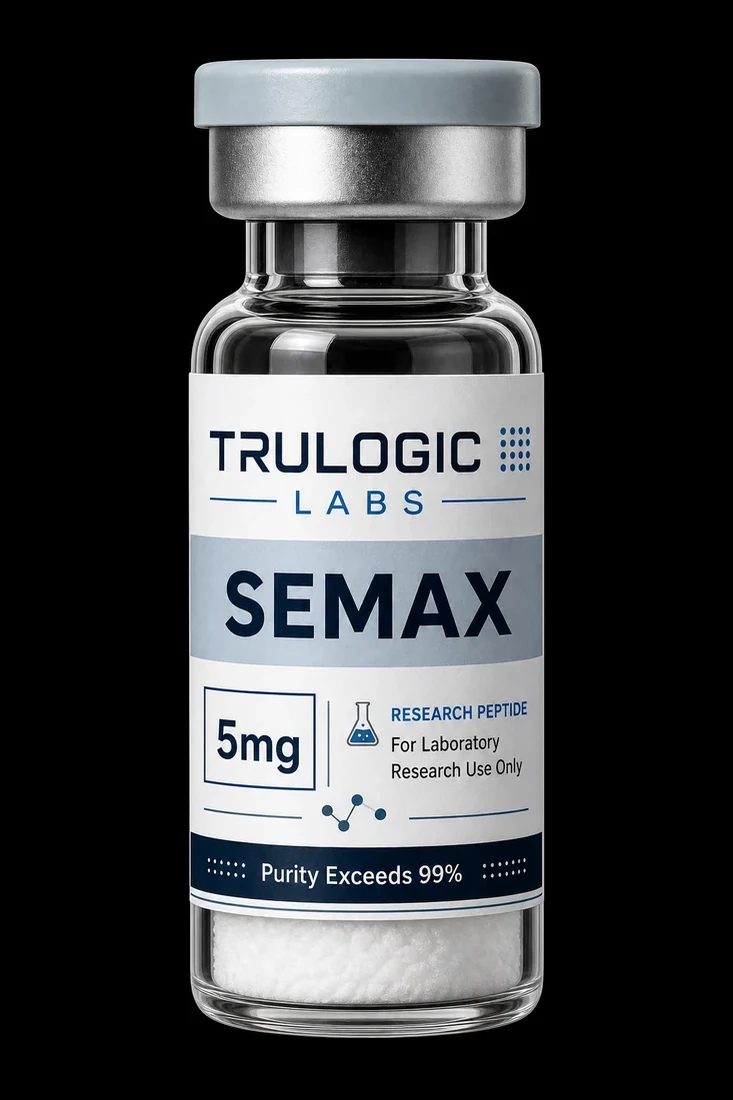
Semax is a synthetic heptapeptide based on the 4-10 fragment of adrenocorticotropic hormone (ACTH), modified to remove the hormone’s classical corticotropic activity while retaining neuroactive properties. Developed by Russian researchers, it has been studied as a nootropic and neuroprotective agent and is referenced in research on cognition, attention, and recovery from ischemic events. As with other peptides from this tradition, most clinical data originate within Russia.
Mechanism of action
Semax is proposed to act largely through modulation of neurotrophic systems, notably increasing expression of brain-derived neurotrophic factor (BDNF) and influencing nerve growth factor (NGF) signaling. Additional reported effects include modulation of the dopaminergic and serotonergic systems and protection against oxidative and ischemic stress in neural tissue. By inhibiting enzymes that degrade endogenous regulatory peptides, it may also prolong related signaling. Precise mechanisms remain under study.
Research findings
Laboratory studies report increased BDNF expression in neural tissue with Semax exposure.,Animal models of cerebral ischemia have reported neuroprotective effects.,Russian clinical research has examined cognitive and attention-related endpoints.,Research suggests modulation of monoamine neurotransmitter systems.,Independent, large-scale international clinical trials are lacking.
Research context
Semax is rapidly metabolized in plasma with a very short half-life, and research has often used intranasal formulations to study central nervous system exposure; human pharmacokinetics remain not well characterized. Study designs in the literature span acute neuroprotection models and multi-day cognitive protocols, with endpoints centered on neurotrophic biomarkers and cognitive or neurological measures. This is a research reference only. Not approved for human use outside regulated settings; consult the primary literature.
Handling & storage
Lyophilized powder is generally stored frozen and protected from light and moisture under controlled laboratory conditions. Reconstituted solutions are typically refrigerated and used within a limited window per standard peptide laboratory handling, avoiding repeated freeze-thaw cycles.
Reported safety signals
Reported tolerability in available studies has generally been described as favorable; comprehensive independent safety characterization is limited by the geographic concentration of the evidence base.
Studied alongside
Semax is frequently paired with Selank in Russian cognitive and mood research, and is discussed in the broader nootropic context alongside other neuroactive compounds.
At a glance
Research strengths
- Defined synthetic sequence with documented neurotrophic effects in studies
- Substantial preclinical neuroprotection literature
- Reported favorable tolerability in available research
- Long history of investigation within a defined research tradition
Limitations & cautions
- Clinical evidence concentrated in Russian studies
- Very short half-life complicates pharmacology
- Limited independent international replication
- Not an approved therapeutic outside investigational settings