Overview
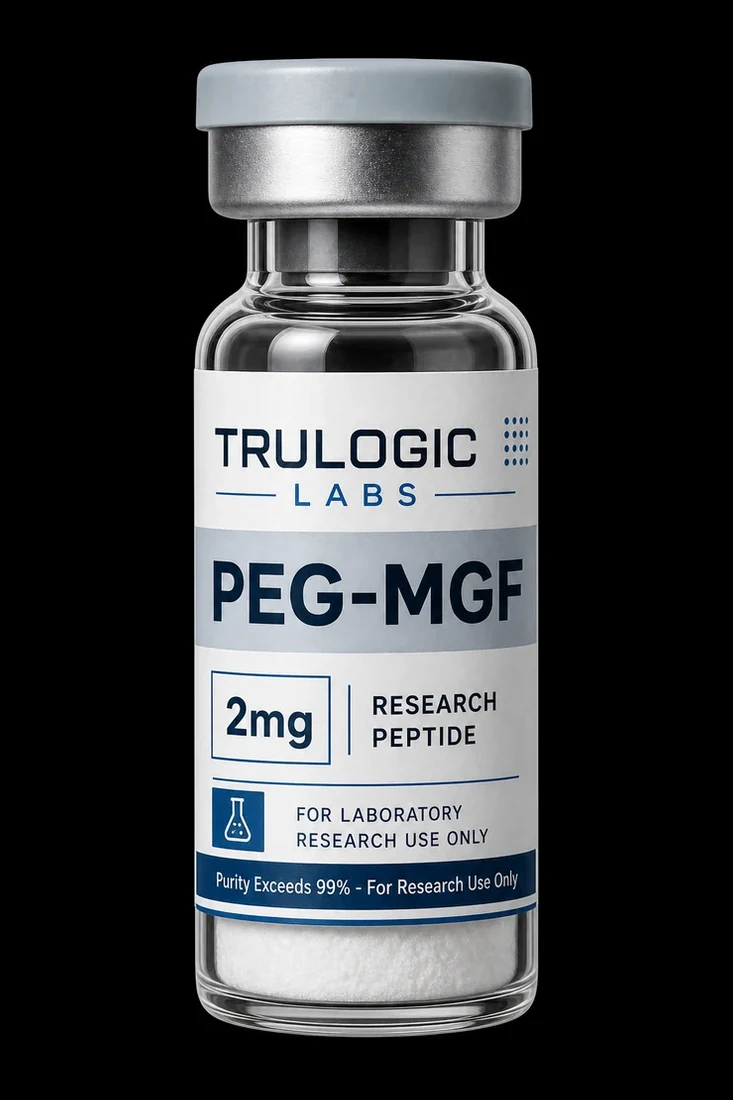
PEG-MGF is a chemically modified version of the Mechano Growth Factor E-domain peptide in which polyethylene glycol (PEG) chains are conjugated to the molecule. PEGylation is a well-established research technique used to increase the stability and circulating duration of peptides that would otherwise degrade rapidly.
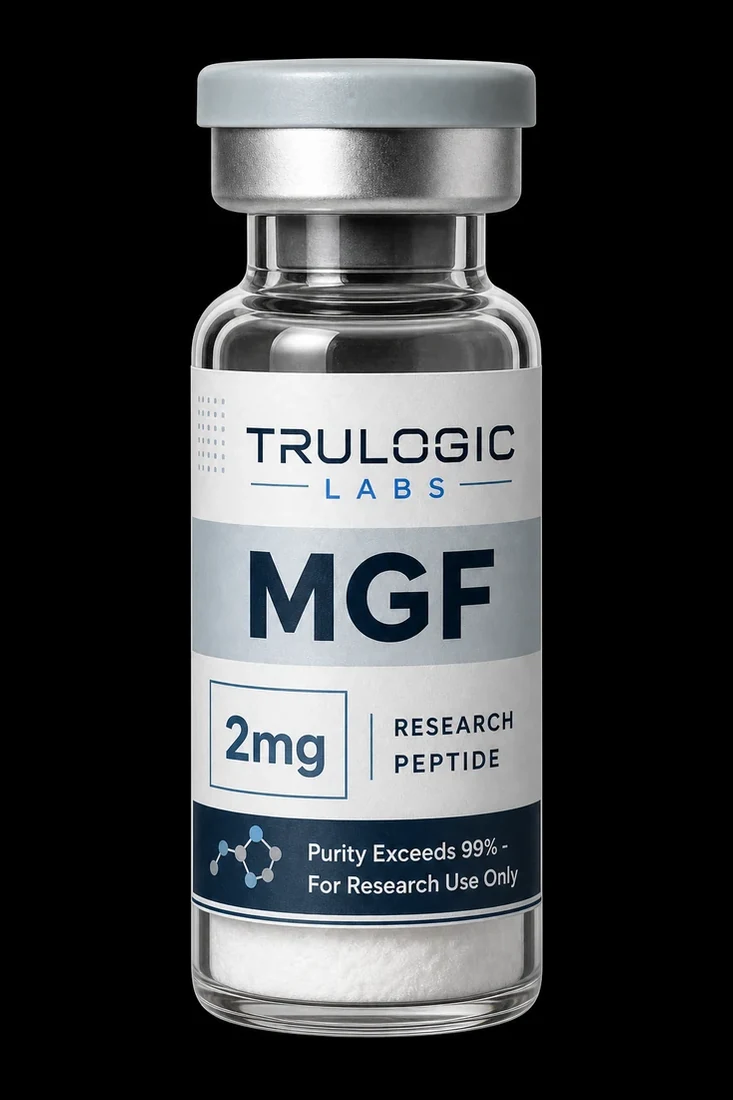
Because native MGF is reported to have a half-life on the order of minutes, PEG-MGF has been studied as a way to maintain MGF-type signaling for a longer period, which is the principal distinction investigators draw between the two forms.
Mechanism of action
Research describes PEG-MGF as retaining the proposed biological activity of the MGF E-domain peptide, namely its role in activating and proliferating muscle satellite cells, while the attached PEG moiety slows enzymatic degradation and renal clearance.
The extended exposure reported for PEG-MGF in study models is framed as enabling more sustained interaction with the muscle-repair signaling pathway compared with the rapidly cleared native peptide, though the underlying receptor interactions are described similarly to native MGF.
Research findings
Studied as a PEGylated form of MGF with extended stability versus the native peptide.,Research suggests prolonged circulating duration from PEGylation.,Retains the proposed satellite cell-activating signaling of MGF in models.,Investigated as a more practical research tool than short-lived native MGF.,Examined alongside native MGF in comparative preclinical literature.
Research context
Research literature reports that PEGylation substantially lengthens the effective half-life of the MGF E-domain peptide relative to the native form, shifting its pharmacokinetic profile toward sustained exposure. Specific parameters vary by conjugation method and study model, and much of the molecular detail remains incompletely characterized. This is a research reference only. Not approved for human use outside regulated settings; consult the primary literature.
Handling & storage
Commonly described in laboratory use as a lyophilized powder stored desiccated and away from light. Long-term storage is generally reported at -20°C or below, with reconstituted material refrigerated for limited periods. Handle as a research chemical with standard laboratory precautions.
Reported safety signals
Side effects of PEG-MGF are not well characterized in controlled human research. As with native MGF, literature notes general theoretical considerations around growth-factor signaling, but specific safety data remain limited.
Studied alongside
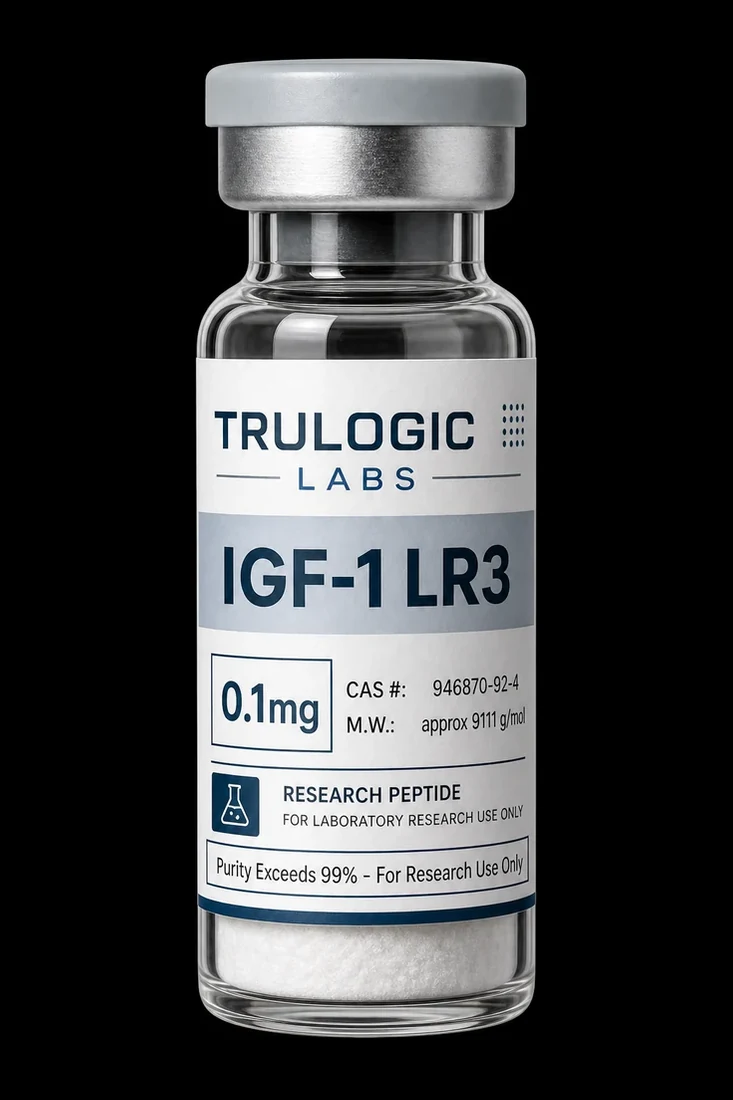
PEG-MGF is most directly compared with native MGF in research, and has been examined in relation to IGF-1 analogs such as IGF-1 LR3 where longer-acting growth-factor signaling is of interest.
At a glance
Research strengths
- Extended half-life versus native MGF reported in research
- Retains proposed MGF satellite cell signaling in models
- More practical as a sustained research tool than native MGF
- Studied directly against native MGF for comparison
Limitations & cautions
- Molecular pathway incompletely characterized
- Limited controlled safety data
- PEGylation profile varies by preparation
- Not approved for human use