Overview
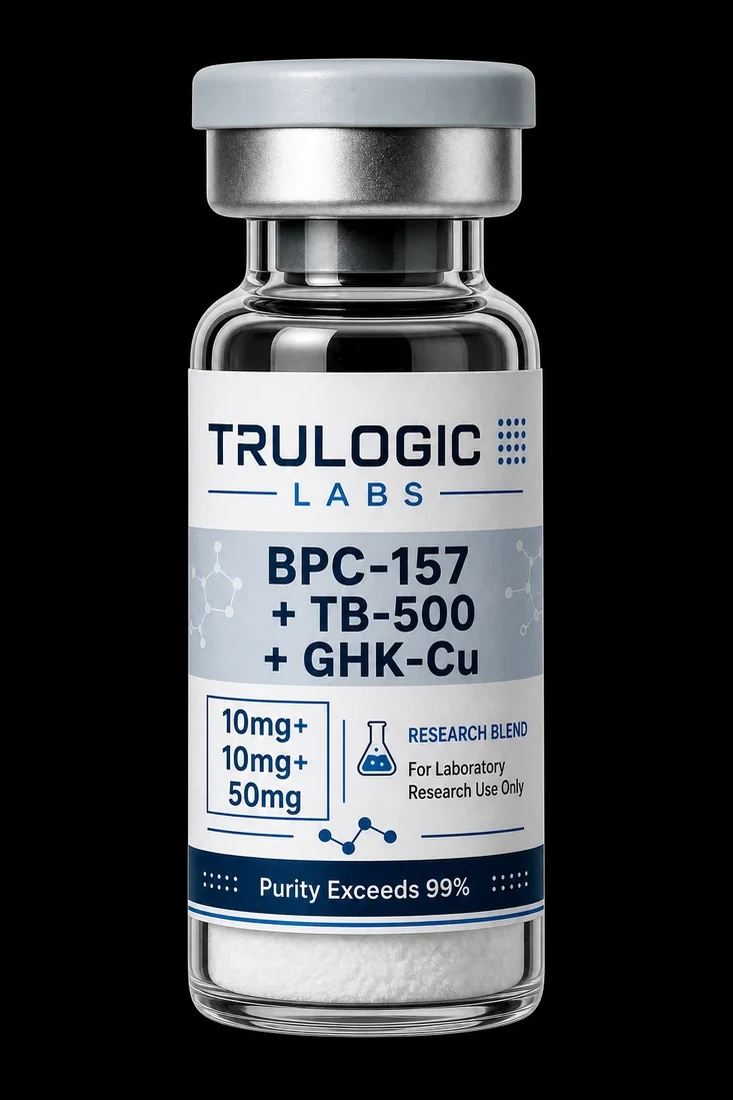
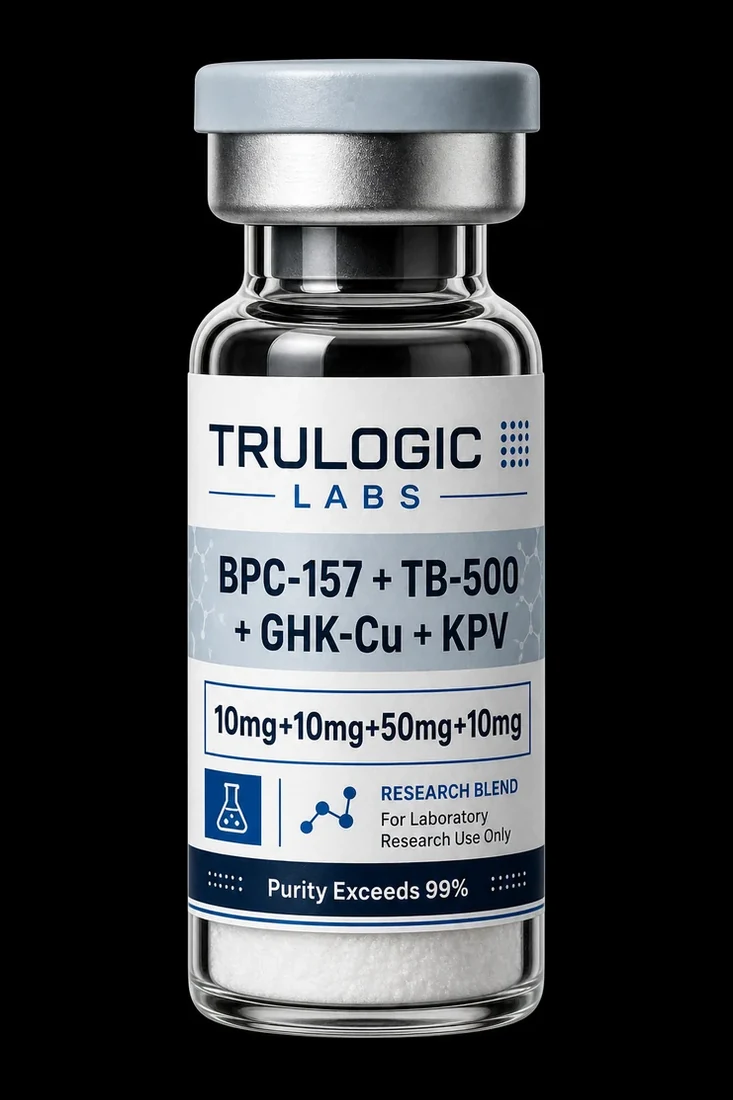
This research blend combines four peptides. BPC-157 (gastric pentadecapeptide), TB-500 (thymosin beta-4 fragment), and GHK-Cu (copper-binding tripeptide) provide the tissue-repair foundation, while KPV (lysine-proline-valine) adds an anti-inflammatory component. KPV is the C-terminal tripeptide of alpha-melanocyte-stimulating hormone and has been studied for anti-inflammatory effects without the pigmentation activity of the parent hormone.
The four-way blend is presented as combining repair and inflammation-modulating mechanisms, the most extensive of the repair-oriented blends in this reference. All components remain research compounds without human therapeutic approval.
Mechanism of action
Research suggests BPC-157 influences healing and angiogenesis pathways, TB-500 supports cell migration and actin regulation, and GHK-Cu drives collagen and extracellular-matrix remodeling. KPV is studied for anti-inflammatory activity, with proposed actions including modulation of pro-inflammatory signaling pathways such as NF-kB inside cells.
The rationale for the four-way combination is that the first three address structural repair while KPV addresses the inflammatory component that often accompanies tissue injury, so the blend is presented as pairing repair with inflammation modulation. These mechanisms derive largely from animal, cell, and dermatologic research.
Research findings
BPC-157, TB-500, and GHK-Cu have each been studied for tissue-repair-related processes.,KPV has been studied for anti-inflammatory activity as an alpha-MSH fragment.,Research suggests KPV may modulate intracellular inflammatory signaling such as NF-kB.,The blend is presented to pair structural repair with inflammation modulation.,KPV lacks the pigmentation activity of full-length alpha-MSH.
Research context
Half-life and study parameters differ across all four components and are drawn largely from animal, cell, and dermatologic research, so combined pharmacokinetics for the blend are not well characterized. This entry summarizes the available findings at a high level only. This is a research reference only. Not approved for human use outside regulated settings; consult the primary literature.
Handling & storage
Lyophilized peptide blend is typically stored at -20 degrees Celsius for long-term laboratory storage and protected from light and moisture. The copper-containing component is particularly sensitive to light and oxidation and is handled accordingly. After reconstitution in a laboratory context it is generally refrigerated and used within a limited window. Avoid repeated freeze-thaw cycles.
Reported safety signals
As research compounds, the components do not have fully characterized human safety profiles, and reported effects come largely from animal and dermatologic studies. The copper-containing component warrants attention to copper handling. Neutral safety characterization should rely on the primary literature.
Studied alongside
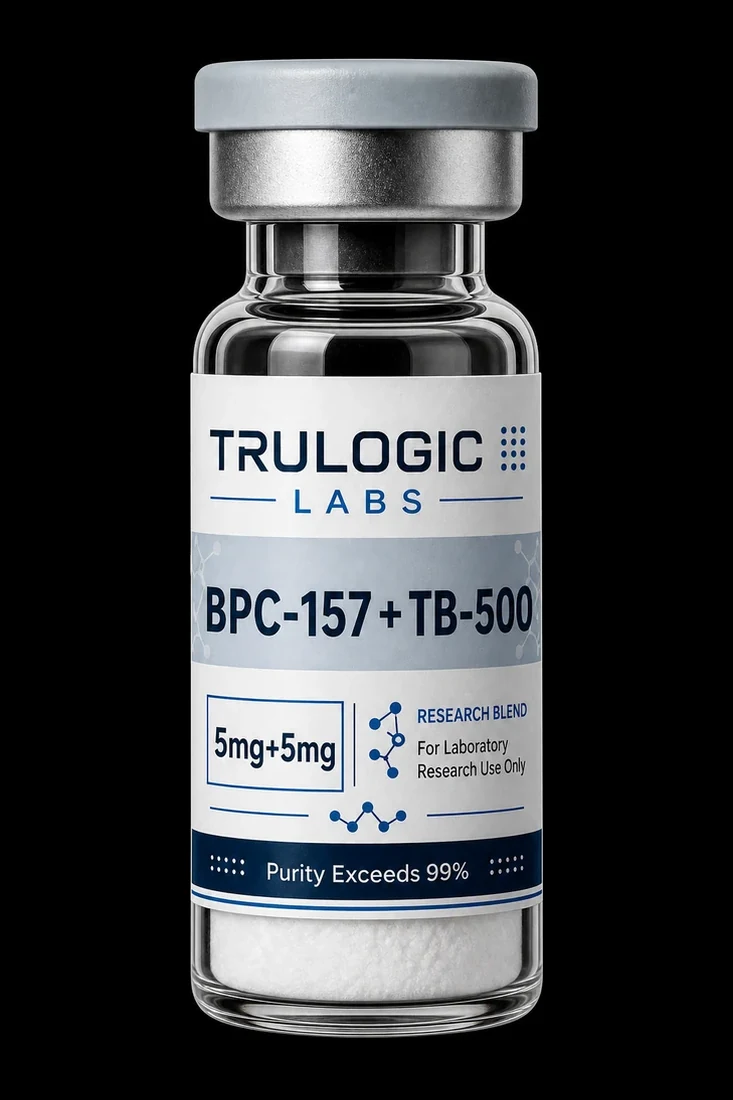
This blend is the most extensive build on the BPC-157 + TB-500 recovery pairing and the BPC-157 + TB-500 + GHK-Cu repair blend. KPV’s anti-inflammatory angle is also discussed alongside immune peptides such as thymosin alpha-1 in research contexts.
At a glance
Research strengths
- Combines repair mechanisms with an anti-inflammatory component.
- KPV provides anti-inflammatory activity without pigmentation effects.
- Most comprehensive of the repair-oriented blends here.
- Each component has its own research literature.
Limitations & cautions
- None of the components is approved for human therapeutic use.
- Four-component blend increases handling and characterization complexity.
- Human clinical efficacy data are limited.
- Blend pharmacokinetics are not well characterized.