Overview
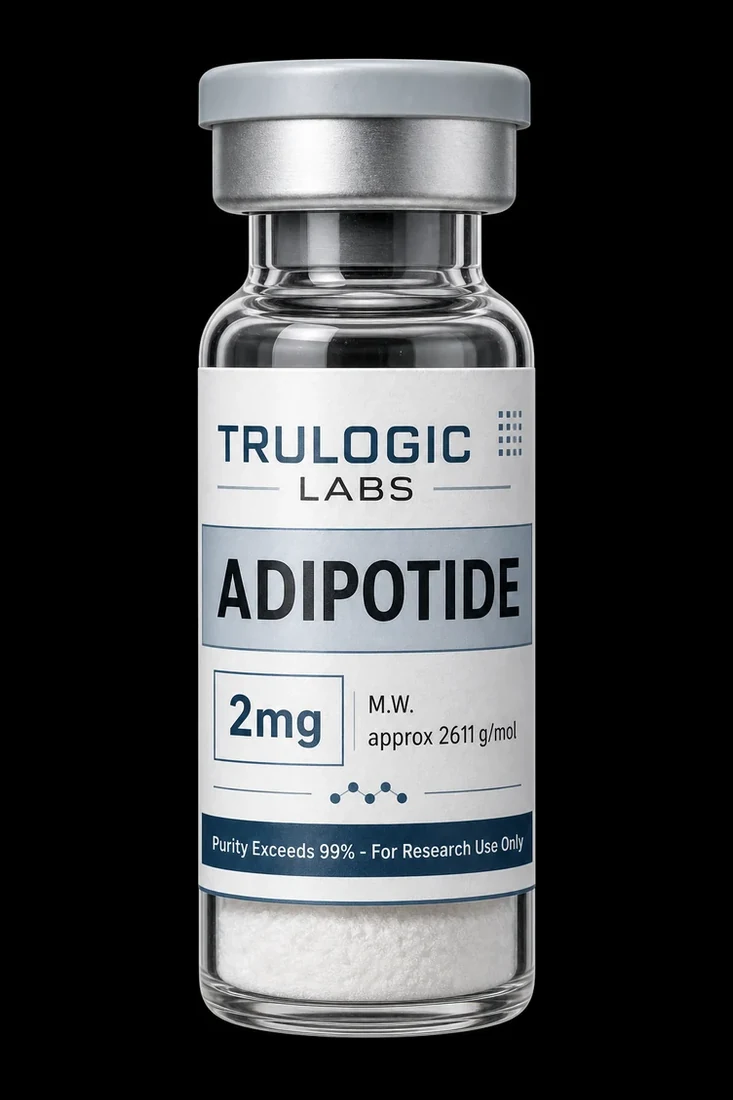
Adipotide, also referred to as FTPP (a fat-targeting pro-apoptotic peptidomimetic), is an engineered molecule combining two functional domains: a homing sequence (CKGGRAKDC) intended to target the vasculature of white adipose tissue, and a pro-apoptotic amphipathic sequence ((KLAKLAK)2) intended to disrupt mitochondrial membranes in those cells.
The compound emerged from research on tumor-vasculature-targeting peptides and was adapted to study the blood supply of fat tissue. It is widely cited in the literature as a proof-of-concept molecule for vasculature-directed approaches to adipose research.
Mechanism of action
Adipotide has been studied as a targeted pro-apoptotic agent. The homing domain is reported to bind markers such as prohibitin and annexin A2 that are associated with the endothelial cells lining capillaries in white adipose tissue. Once localized, the (KLAKLAK)2 domain is reported to disrupt mitochondrial membranes and trigger programmed cell death (apoptosis) in those endothelial cells.
The proposed downstream effect in preclinical models is a reduction of the blood supply feeding white adipose tissue, with associated reductions in fat mass. The selectivity and full mechanism remain subjects of the research literature.
Research findings
- Demonstrated fat-mass reduction in non-human primate and rodent preclinical models.
- Designed to target adipose-tissue vasculature via the prohibitin and annexin A2 axis.
- Reported to induce endothelial apoptosis through its (KLAKLAK)2 domain.
- A Phase 1 human trial was terminated due to dose-limiting nephrotoxicity, and clinical development was discontinued.
- Frequently cited as a reference example of vasculature-targeted peptidomimetic design.
Research context
Pharmacokinetic parameters for Adipotide in the public literature are limited, and half-life is not well characterized. Study dose ranges in preclinical models varied by species and protocol, and human dosing in the terminated trial is not a basis for generalization. The reported nephrotoxicity in clinical study is a defining feature of its research history. This is a research reference only. Not approved for human use outside regulated settings; consult the primary literature.
Handling & storage
Lyophilized peptidomimetic material is generally reported as stable when sealed and stored cold, dry, and protected from light, with frozen storage recommended for long-term laboratory storage. Reconstituted solutions are typically described as less stable. Minimizing freeze-thaw cycles follows standard laboratory peptide-handling practice.
Reported safety signals
The most significant reported finding is dose-limiting nephrotoxicity (kidney toxicity) observed in clinical study, which led to discontinuation of development. Other effects observed in preclinical models have been reported in the literature. The full safety profile outside controlled research is not established.
Studied alongside
Adipotide is mechanistically unlike the appetite- and metabolism-modulating compounds it is sometimes compared with, such as semaglutide and cagrilintide. It is occasionally referenced alongside other metabolically studied compounds such as MOTS-c purely for contrast in mechanism.
At a glance
Research strengths
- Distinctive targeted, vasculature-directed mechanism of action.
- Demonstrated fat-mass reduction in preclinical primate models.
- Well-documented design pairing a homing domain with a pro-apoptotic domain.
- Serves as a key reference example in targeted-peptidomimetic research.
Limitations & cautions
- Clinical development was halted due to dose-limiting nephrotoxicity.
- Pharmacokinetics and half-life are not well characterized.
- Not approved for therapeutic use; research-only status.
- Significant safety concerns documented in human study.